Upper Abdominal Bulge or Lump Above the Belly Button: Causes, Symptoms & When to See a Doctor

This article is medically reviewed by Dr. Ajay Patel, MD, a Board-Certified Internal Medicine Physician (USA), for accuracy, clinical relevance, and adherence to current medical guidelines.
A bulge or lump above the belly button often causes worry. Many people notice it while standing, sitting up, or during exercise. Some feel a hard area. Others see the upper stomach stick out more than usual.
This change can appear suddenly or grow slowly. It may cause pain, pressure, or no discomfort at all. In many cases, the cause is not serious. Still, some conditions need medical care.
This guide explains the most common reasons for an upper abdominal bulge. It also helps you spot warning signs. You will learn when to see a doctor and what tests may follow.
Doctors call this area the epigastric region. It sits between the breastbone and the belly button. Several muscles, tissues, and organs lie under this area. Changes in any of them can cause a visible or firm bulge.
Where exactly is the upper abdomen?
The abdomen has four main sections. The upper abdomen includes:
- The area below the rib cage
- The center above the belly button
- The left and right upper sides
A bulge can appear in the middle, left, or right side. Its location gives doctors clues about the cause.
What does an upper abdominal bulge feel like?
People describe this problem in many ways. These descriptions often guide diagnosis.
Common sensations
- A soft bulge that flattens when lying down
- A firm or hard lump that stays in place
- A bulge that appears during sit-ups or coughing
- A tight or heavy feeling in the upper stomach
- Mild pain or sharp pain with movement
Some bulges change size during the day. Others stay the same.
When does the bulge become more visible?
Many people notice the bulge during specific actions:
- Sitting up from bed
- Doing crunches or sit-ups
- Lifting heavy objects
- Standing for long periods
- After eating a large meal
These actions increase pressure inside the abdomen. Weak areas push outward and form a bulge.
Is a hard lump more serious than a soft one?
Not always. Texture alone does not decide severity.
Soft bulges often link to:
- Fat tissue pushing through muscle
- Muscle separation
- Benign growths under the skin
Hard bulges may relate to:
- Tight muscle walls
- Hernias under tension
- Enlarged internal structures
Pain, skin color change, fever, or nausea matter more than firmness.
Common causes of a bulge above the belly button
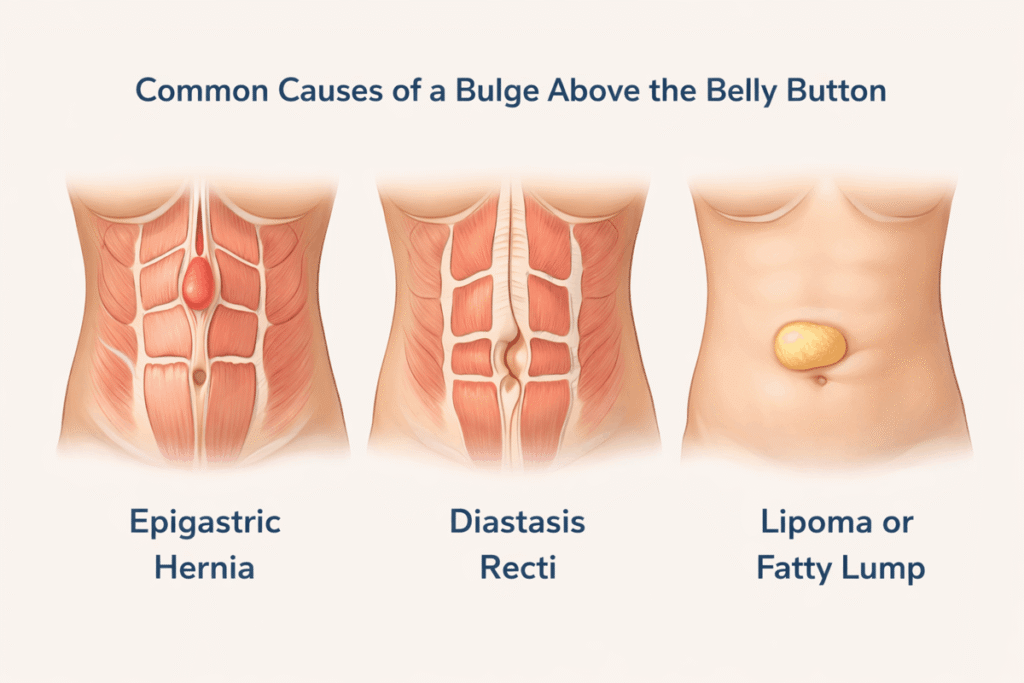
Epigastric hernia
This is one of the most frequent causes. Fat or tissue pushes through a weak spot in the upper abdominal wall.
Key signs
- Bulge in the upper middle abdomen
- More visible when standing or straining
- May feel tender or painful
Some epigastric hernias stay small. Others grow over time.
Diastasis recti
This condition causes separation of the abdominal muscles. It often affects pregnant women, postpartum women, and people with weight changes.
Key signs
- Long ridge or bulge in the center
- Bulge shows during sit-ups
- Usually soft and not painful
This condition does not involve a hole in the muscle.
Lipoma or fatty lump
A lipoma is a non-cancerous fatty growth under the skin.
Key signs
- Soft and movable lump
- Slow growth
- Usually painless
Lipomas can appear anywhere on the abdomen.
Symptoms that often come with an upper abdominal bulge
Pay attention to these symptoms:
- Burning or aching pain
- Pressure after meals
- Sharp pain during movement
- Nausea or vomiting
- Skin redness or warmth
Some symptoms suggest irritation. Others suggest urgent problems.
When should you seek medical advice?
You should contact a doctor if:
- The bulge grows quickly
- Pain increases
- The bulge becomes hard and does not flatten
- You feel sick or feverish
- The skin over the bulge darkens
Emergency care is needed if severe pain, vomiting, or bowel blockage occurs.
Causes of an Upper Abdominal Bulge by Location and Situation
The position of a bulge gives strong clues about its cause. Doctors often start with location before ordering tests.
Bulge in the upper middle abdomen
This area sits between the rib cage and the belly button. Many people notice a bulge here when sitting up or straining.
Common causes
Epigastric hernia
This cause appears most often in the upper middle abdomen. Fat or tissue pushes through a weak muscle area. The bulge may flatten when you lie down.
Diastasis recti
Muscle separation creates a ridge along the center line. The bulge often appears during sit-ups. It usually does not cause sharp pain.
Gas or bloating
Digestive pressure can push the upper abdomen outward. This bulge feels soft and often changes after bowel movements or meals.
Bulge in the left upper abdomen
The left side holds the stomach, spleen, and part of the colon.
Possible causes
Stomach distension
Large meals or delayed digestion can cause a visible bulge. This bulge often comes with fullness or burping.
Enlarged spleen
This cause is less common. It may link to infection or blood disorders. Doctors check this with imaging.
Muscle strain or tear
Sports or lifting injuries can create swelling or a firm lump. Pain often worsens with movement.
Bulge in the right upper abdomen
The liver and gallbladder sit on the right side.
Possible causes
Liver enlargement
This may cause fullness or pressure under the ribs. It often comes with fatigue or nausea.
Gallbladder issues
Inflammation may cause pain rather than a visible lump. Doctors confirm with scans.
Abdominal wall hernia
Hernias can appear on either side. The bulge often changes with posture.
Bulge under the rib cage
Many people describe a bulge under the ribs rather than above the belly button.
Causes include
- Tight or swollen muscles
- Rib cartilage inflammation
- Upper abdominal hernia
Pain with breathing or twisting suggests a muscle source.
Upper abdominal bulge during pregnancy
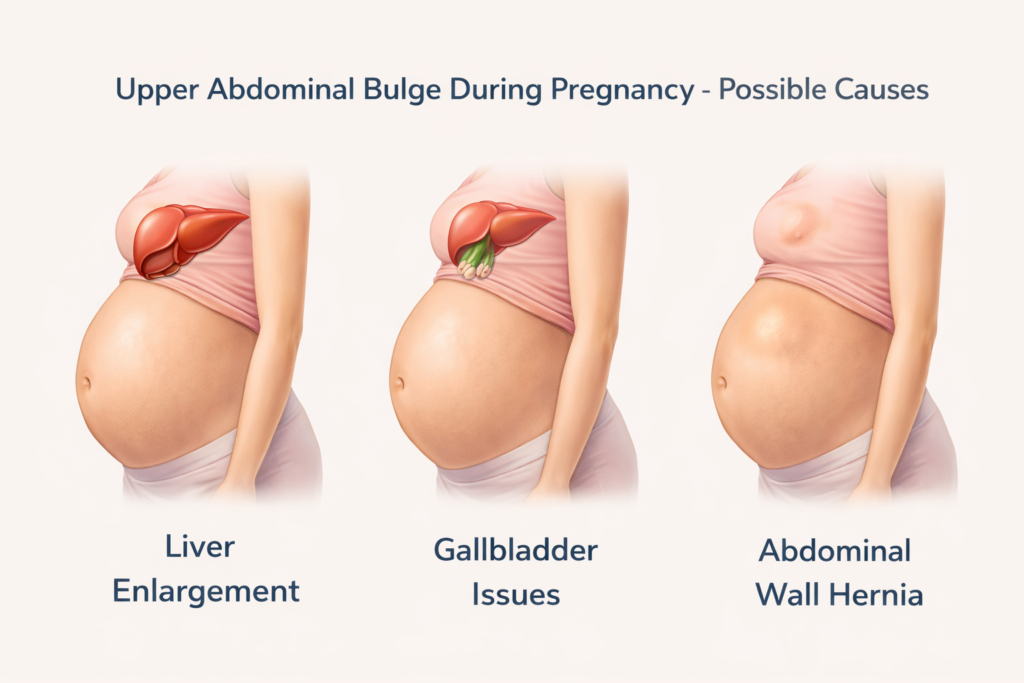
The liver and gallbladder sit on the right side.
Possible causes
Liver enlargement
This may cause fullness or pressure under the ribs. It often comes with fatigue or nausea.
Gallbladder issues
Inflammation may cause pain rather than a visible lump. Doctors confirm with scans.
Abdominal wall hernia
Hernias can appear on either side. The bulge often changes with posture.
Bulge under the rib cage
Many people describe a bulge under the ribs rather than above the belly button.
Causes include
- Tight or swollen muscles
- Rib cartilage inflammation
- Upper abdominal hernia
Pain with breathing or twisting suggests a muscle source.
Upper abdominal bulge during pregnancy
Pregnancy places strong pressure on the abdominal wall.
Common pregnancy-related causes
Diastasis recti
Hormonal changes and stretching widen the muscle gap. The bulge often shows during movement.
Umbilical or epigastric hernia
Existing weak spots may enlarge as the uterus grows.
Normal body changes
Fat and fluid shifts can change abdominal shape without disease.
Pregnant women should seek care if pain, redness, or vomiting occurs.
Postpartum upper abdominal bulge
After delivery, the abdomen needs time to recover.
Typical reasons
- Persistent muscle separation
- Weak core muscles
- Poor posture during feeding or lifting
This bulge often improves with guided physical therapy.
Bulge in upper abdomen during sit-ups or exercise
Exercise-related bulges draw attention fast.
Main causes
Diastasis recti
The abdomen forms a cone shape during crunches.
Hernia
Pressure pushes tissue outward during strain.
Muscle imbalance
Strong outer muscles push against weak inner support.
Stopping painful exercises reduces risk of worsening the bulge.
Painful vs painless bulges
Painless bulges
- Lipoma
- Diastasis recti
- Mild hernia
These often need monitoring rather than urgent care.
Painful bulges
- Hernia under tension
- Muscle injury
- Inflamed tissue
Pain that worsens needs medical review.
Sudden bulge in the upper abdomen
A sudden bulge raises concern.
Possible reasons include:
- Acute hernia protrusion
- Muscle tear
- Severe bloating
Sudden pain, vomiting, or fever needs urgent care.
How Doctors Diagnose an Upper Abdominal Bulge
Doctors follow a step-by-step approach. They aim to find the cause without delay. Most cases start with a physical exam.
Step 1: Medical history
The doctor asks clear questions. These answers matter.
Common questions include:
- When did the bulge first appear?
- Does it change with position or strain?
- Is there pain, nausea, or vomiting?
- Did pregnancy, weight change, or heavy lifting occur?
- Does the bulge reduce when lying down?
Clear answers help narrow the cause fast.
Step 2: Physical examination
The exam often happens while standing and lying down.
The doctor may:
- Inspect the abdomen for shape changes
- Ask you to cough or sit up
- Press gently on the bulge
- Check if the bulge moves or reduces
A bulge that increases with strain often points to a hernia or muscle weakness.
Step 3: Imaging tests
If the exam does not give a clear answer, imaging follows.
Doctors follow a step-by-step approach. They aim to find the cause without delay. Most cases start with a physical exam.
Step 1: Medical history
The doctor asks clear questions. These answers matter.
Common questions include:
- When did the bulge first appear?
- Does it change with position or strain?
- Is there pain, nausea, or vomiting?
- Did pregnancy, weight change, or heavy lifting occur?
- Does the bulge reduce when lying down?
Clear answers help narrow the cause fast.
Step 2: Physical examination
The exam often happens while standing and lying down.
The doctor may:
- Inspect the abdomen for shape changes
- Ask you to cough or sit up
- Press gently on the bulge
- Check if the bulge moves or reduces
A bulge that increases with strain often points to a hernia or muscle weakness.
Step 3: Imaging tests
If the exam does not give a clear answer, imaging follows.
Upper abdominal bulge causes
| Cause | Typical Location | Pain Level | Changes with Strain | Common Test |
|---|---|---|---|---|
| Epigastric hernia | Upper middle abdomen | Mild to moderate | Yes | Ultrasound |
| Diastasis recti | Center line | None to mild | Yes | Physical exam |
| Lipoma | Any upper area | None | No | Physical exam |
| Muscle strain | Left or right side | Moderate | Yes | Clinical exam |
| Organ enlargement | Left or right side | Variable | No | CT or ultrasound |
Treatment options based on diagnosis
Treatment depends on cause, symptoms, and risk.
Epigastric hernia treatment
Small hernias without pain may need observation only.
Doctors may suggest:
- Avoiding heavy lifting
- Weight control
- Monitoring size and pain
Surgery may be advised if:
- Pain increases
- The bulge grows
- Tissue becomes trapped
Diastasis recti treatment
This condition often improves without surgery.
Main approaches include:
- Guided physical therapy
- Core-strengthening programs
- Posture correction
Crunches and sit-ups may worsen the bulge early on.
Surgery is rare and reserved for severe cases.
Lipoma treatment
Lipomas do not need treatment unless they:
- Cause discomfort
- Grow fast
- Raise cosmetic concern
Removal is a simple outpatient procedure.
Muscle strain or tear
Treatment focuses on healing.
Doctors often suggest:
- Rest and activity changes
- Ice or heat therapy
- Anti-inflammatory medicine
Most strains heal within weeks.
Internal organ causes
Treatment depends on the organ involved.
This may include:
- Medication
- Specialist referral
- Further imaging
Doctors act fast if serious signs appear.
Can lifestyle changes reduce an upper abdominal bulge?
Some bulges respond well to daily habits.
Helpful steps include:
- Eating smaller meals
- Improving posture
- Avoiding strain
- Managing weight
These steps reduce pressure inside the abdomen.
What not to do
Avoid these actions:
- Ignoring worsening pain
- Forcing the bulge inward
- Continuing painful workouts
- Self-diagnosing without scans
Early care prevents complications.
When surgery becomes necessary
Surgery may be advised if:
- Blood supply becomes blocked
- Pain becomes severe
- Bowel movement stops
- Skin color over the bulge changes
These signs need urgent care.
When to See a Doctor for an Upper Abdominal Bulge
Many upper abdominal bulges do not cause harm. Still, some signs need medical review.
Book a doctor visit if:
- The bulge lasts more than two weeks
- The size slowly increases
- Pain appears during daily movement
- The bulge becomes firm or tender
- Digestion feels different than usual
A primary care doctor often starts evaluation. They may refer you to imaging or a specialist.
When to seek emergency care
Go to emergency care if any of these occur:
- Sudden severe abdominal pain
- Vomiting with pain
- Fever with abdominal swelling
- Skin over the bulge turns red, purple, or dark
- The bulge feels stuck and does not reduce
These signs may point to trapped tissue or reduced blood flow.
Long-term outlook
Most people recover well after diagnosis.
- Muscle separation often improves with guided exercises
- Small hernias may remain stable for years
- Surgery has high success rates when needed
- Benign lumps rarely cause long-term issues
Early review lowers stress and improves outcomes.
Can upper abdominal bulges be prevented?
Some causes cannot be prevented. Others respond well to daily habits.
Helpful steps include:
- Maintain steady body weight
- Avoid sudden heavy lifting
- Support the core during exercise
- Treat chronic cough or constipation
- Use correct posture during sitting and lifting
These actions reduce pressure on the abdominal wall.
Key points to remember
- A bulge above the belly button has many causes
- Pain, growth, and firmness matter more than size
- Imaging often confirms the cause
- Many cases do not need surgery
- Emergency signs require fast action
Frequently Asked Questions (FAQs)
1. Is a hard bulge above the belly button dangerous?
Not always. A hard bulge may come from muscle tension, a hernia, or firm tissue. Danger depends on pain, growth, and blood flow. Severe pain or vomiting needs urgent care.
2. Can diastasis recti cause a bulge in the upper abdomen?
Yes. Diastasis recti causes muscle separation along the center line. The bulge often appears during sitting up or straining. It usually feels soft and causes mild discomfort.
3. Why does my upper stomach bulge when I do sit-ups?
Sit-ups raise abdominal pressure. Weak muscles or separation allow tissue to push outward. This pattern often links to diastasis recti or an abdominal wall hernia.
4. Can a bulge in the upper abdomen go away on its own?
Some do. Muscle-related bulges may reduce with rest and guided exercises. Lipomas stay stable. Hernias usually remain and may grow over time.
5. Is a painless lump in the upper abdomen serious?
Most painless lumps are benign. Examples include lipomas or muscle separation. Doctors still check persistent lumps to confirm the cause.
6. Can pregnancy cause an upper abdominal bulge?
Yes. Pregnancy stretches the abdominal wall. This can reveal muscle separation or a hernia. Most pregnancy-related bulges improve after delivery.
7. What tests confirm the cause of an abdominal bulge?
Doctors often start with a physical exam. Ultrasound is common. CT or MRI helps when deeper structures need review.
8. Does bloating cause a visible upper abdominal bulge?
Yes. Gas and delayed digestion can push the upper abdomen outward. This bulge often changes after meals or bowel movement.
9. Can exercise make an abdominal bulge worse?
Painful or high-pressure exercises may worsen the bulge. Controlled movements and core guidance help protect the abdominal wall.
10. When is surgery required for an upper abdominal bulge?
Surgery is considered when pain increases, tissue becomes trapped, or blood supply drops. Doctors decide based on symptoms and imaging.