Is Alkaline Water Good for You? Health Benefits, Side Effects, and Facts

This article is medically reviewed by Dr. Ajay Patel, MD, a Board-Certified Internal Medicine Physician (USA), for accuracy, clinical relevance, and adherence to current medical guidelines.
Alkaline water has become a popular topic in health and wellness discussions. Many people want to know what alkaline water is and whether alkaline water is good for you. Alkaline water has a higher pH level than regular drinking water and often contains alkaline minerals. Some people drink alkaline water for hydration and digestion, while others believe it supports overall health. Understanding the science behind alkaline water helps clarify its real benefits and limitations.
What Is Alkaline Water?
Alkaline water is drinking water with a pH level higher than neutral water. Regular water usually has a pH of about 7. Alkaline water typically ranges from pH 8 to 9.5. This higher pH comes from naturally occurring or added minerals such as calcium, magnesium, and potassium.
Water can become alkaline in two ways. It may absorb minerals naturally while flowing over rocks and soil. It can also be processed using filtration systems that increase mineral content or raise pH levels. Because of this composition, many people prefer drinking alkaline water over standard tap or purified water.
Difference Between Regular Water and Alkaline Water
| Feature | Regular Water | Alkaline Water |
|---|---|---|
| Average pH | Around 7 | 8 to 9.5 |
| Mineral content | Low to moderate | Moderate to high |
| Taste | Neutral | Slightly smooth |
| Common source | Tap, RO | Mineral or treated |
This difference explains why alkaline water is often marketed as a premium drinking option.
What Does Alkaline Mean?
The word alkaline describes substances with a pH greater than 7. Alkaline substances counter acidity. In drinking water, alkalinity comes from minerals rather than artificial chemicals.
The human body already maintains a slightly alkaline internal environment. Blood pH stays tightly regulated between 7.35 and 7.45. Drinking alkaline water does not change blood pH permanently. The body adjusts pH balance through breathing and kidney function, not water intake alone.
What Is Alkalising?
Alkalising refers to increasing alkalinity. In the context of water, alkalising means raising pH levels by adding minerals or changing water composition. Many people associate alkalising with health improvement, but alkalising water does not detox the body.
The liver and kidneys naturally remove waste from the body. Alkalising water mainly supports hydration habits. It does not neutralize all acids in the body or prevent disease.
What Is Ionized Water?
Ionized water is water that undergoes electrolysis. This process separates water into acidic and alkaline streams. The alkaline portion becomes ionized water.
Ionized water and alkaline water are often confused, but they are not always the same. Ionization changes electrical charge, while alkaline water focuses on mineral content and pH level.
Ionized Water vs Alkaline Water
| Aspect | Alkaline Water | Ionized Water |
|---|---|---|
| pH level | High | High |
| Mineral source | Natural or added | Depends on source |
| Processing | Filtration or minerals | Electrolysis |
| Health impact | Hydration support | Limited evidence |
Understanding this difference helps answer questions about ionized water benefits accurately.
What Does Alkaline Water Do in the Human Body?
After consumption, alkaline water enters the stomach and mixes with stomach acid. The stomach neutralizes most of the alkalinity quickly. The water then absorbs like regular water in the digestive system.
Alkaline water does not travel through the body in an alkaline state. It does not change blood pH or cell acidity. The main effect of alkaline water comes from hydration and mineral intake rather than chemical pH changes.
How Do Alkaline Levels Affect the Human Body?
The body regulates alkaline levels carefully. Even small changes in blood pH can cause serious health issues. For this reason, the body prevents food and drinks from altering internal pH significantly.
Alkaline water may slightly affect urine pH, but it does not override the body’s natural control systems. This explains why alkaline water is not a medical treatment but may still support healthy hydration habits.
Why Do People Drink Alkaline Water?
People drink alkaline water for several practical reasons. Many find the taste smoother than regular water. Some feel more comfortable drinking it when dealing with mild acid discomfort. Others simply drink more water when they enjoy the taste.
| Reason | Explanation |
|---|---|
| Taste | Less acidic feel |
| Hydration | Encourages regular intake |
| Minerals | Adds calcium and magnesium |
| Preference | Lifestyle choice |
These reasons explain the growing interest in alkaline water worldwide.
Alkaline Water Benefits, Uses, and Health Impact
Alkaline Water Benefits
Many people choose alkaline water because they believe it offers health advantages beyond regular drinking water. The benefits of alkaline water mainly relate to hydration quality, mineral intake, and personal comfort rather than dramatic changes in body chemistry.
One of the most discussed alkaline water benefits is improved hydration. People often report that alkaline water tastes smoother. This taste difference encourages them to drink more water throughout the day. Better hydration supports digestion, circulation, temperature control, and overall physical performance.
Another benefit of alkaline water comes from its mineral content. Alkaline water often contains calcium, magnesium, and potassium. These minerals play an important role in muscle function, nerve signaling, and bone health. While food remains the main mineral source, drinking alkaline water can contribute small additional amounts.
Some people also associate alkaline water benefits with digestive comfort. Alkaline water may temporarily neutralize excess stomach acid. This effect may provide short-term relief for people who experience mild acid discomfort. It does not replace medical treatment for digestive conditions.
Benefits of Drinking Alkaline Water
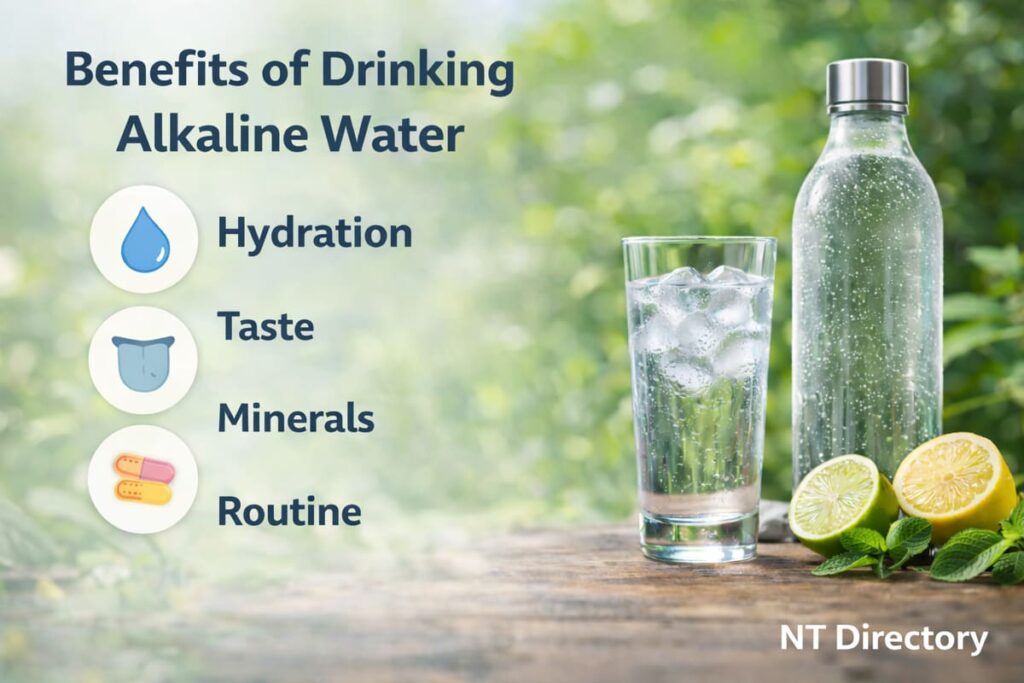
The benefits of drinking alkaline water often appear through daily habits rather than chemical changes. When people switch from sugary beverages or low-quality water to alkaline water, overall hydration improves.
| Area | Benefit of drinking alkaline water |
|---|---|
| Hydration | Encourages higher daily intake |
| Taste | Feels smoother for many users |
| Minerals | Supplies calcium and magnesium |
| Routine | Supports consistent water habits |
These benefits explain why drinking alkaline water feels helpful for some people, even though it does not alter blood pH.
What Does Alkaline Water Do in the Body?
Many people ask what does alkaline water do after consumption. Once alkaline water enters the stomach, it mixes with gastric acid. The stomach neutralizes most of the alkalinity quickly. The water then moves into the intestines and absorbs like regular water.
Alkaline water does not stay alkaline inside the bloodstream. The body tightly controls internal pH through the lungs and kidneys. Because of this regulation, alkaline water does not change blood acidity or cure health conditions. Its primary role remains hydration support.
What Is Alkaline Water Good For?
Alkaline water suits specific lifestyle needs rather than everyone. It works best for people who struggle to drink enough water or prefer a smoother taste.
Alkaline water may be useful for:
- People with low daily water intake
- Individuals sensitive to acidic flavors
- Athletes who drink large volumes of water
- Those seeking mineral-enhanced hydration
| Use case | How alkaline water helps |
|---|---|
| Low hydration | Improves consistency |
| Exercise | Supports fluid balance |
| Taste sensitivity | Easier to drink |
| Mineral intake | Adds trace minerals |
These points clarify what alkaline water is good for without overstating its impact.
Why Drink Alkaline Water?
Why drink alkaline water often comes down to preference and routine. Many people find alkaline water easier to consume regularly. When people enjoy the taste of their water, they tend to drink more.
Hydration plays a larger role in health than water pH. Drinking alkaline water can support healthy habits when it replaces sugary drinks or improves overall water intake. This reason explains its popularity.
Is Alkaline Water Better for You Than Regular Water?
Is alkaline water better for you depends on the individual. Both alkaline water and regular water hydrate the body effectively. Alkaline water does not outperform regular water in changing body pH or preventing illness.
| Comparison | Regular Water | Alkaline Water |
|---|---|---|
| Hydration | Effective | Effective |
| pH impact | Neutral | Neutral after digestion |
| Minerals | Varies | Often higher |
| Taste | Neutral | Slightly smooth |
For most healthy adults, the best water is the one they drink consistently.
Is Alkaline Water Good for Health?
Is alkaline water good for health requires a balanced answer. Alkaline water supports hydration, and hydration supports health. That connection remains indirect. Alkaline water does not detox the body or treat medical conditions.
Health benefits appear when alkaline water encourages better hydration habits. Without that behavioral change, alkaline water offers no special advantage over regular drinking water.
Alkaline Water Benefits and Risks
Understanding alkaline water benefits and risks helps maintain realistic expectations.
Benefits
- Supports hydration habits
- Provides alkaline minerals
- May feel gentler on the stomach
Risks
- Excessive intake may reduce stomach acidity
- High pH may cause digestive discomfort
- Not suitable for people with kidney conditions
| Intake level | Impact |
|---|---|
| Moderate | Generally safe |
| Excessive | Possible imbalance |
| Medical conditions | Requires caution |
Moderation keeps alkaline water safe for most people.
Alkaline Water Side Effects, Safety, and Daily Limits
Is Alkaline Water Healthy for Everyone?
Alkaline water is not harmful for most healthy adults when consumed in moderation. However, alkaline water is not suitable for everyone. The human body already maintains a precise pH balance. Drinking water with a very high pH does not improve this balance and may create discomfort for some people.
People with normal kidney function usually handle alkaline water without issues. The kidneys filter excess minerals and maintain acid–base balance. For people with kidney disease or reduced kidney function, alkaline water may cause problems because their bodies cannot regulate minerals efficiently.
This makes it important to understand personal health conditions before switching to drinking alkaline water regularly.
Alkaline Water Side Effects
Alkaline water side effects usually appear when people drink it excessively or consume water with a very high pH level. Mild side effects are more common than serious ones.
Common alkaline water side effects include:
- Nausea or bloating
- Reduced appetite
- Mild digestive discomfort
- Altered stomach acid levels
In rare cases, excessive alkaline water intake may lead to alkalosis. Alkalosis occurs when the body becomes too alkaline. Symptoms may include muscle twitching, confusion, and nausea. This condition is uncommon and usually linked to underlying medical issues or extreme intake.
| Side effect | Cause |
|---|---|
| Digestive discomfort | Reduced stomach acidity |
| Nausea | High pH intake |
| Mineral imbalance | Excessive consumption |
| Alkalosis (rare) | Prolonged overuse |
These side effects highlight why moderation matters.
Who Should Avoid Drinking Alkaline Water?
Certain groups should be cautious with alkaline water. Medical guidance becomes important in these cases.
People who should limit or avoid alkaline water include:
- Individuals with kidney disease
- People taking medications that affect mineral balance
- Those with low stomach acid levels
- Infants and young children
For these groups, regular drinking water often remains the safer choice.
How Much Alkaline Water Can You Drink a Day?
How much alkaline water you can drink a day depends on overall hydration needs and pH level. Most health experts suggest moderation rather than complete replacement of regular water.
General guidance:
- Limit alkaline water to one or two liters per day
- Choose pH levels between 8 and 9
- Balance alkaline water with regular water
| Daily intake | Recommendation |
|---|---|
| 1–2 glasses | Safe for most people |
| 1–2 liters | Acceptable with moderation |
| Full replacement | Not recommended long-term |
This approach reduces the risk of alkaline water side effects while allowing people to enjoy its taste and minerals.
Is Ionized Water Good for You?
Ionized water often gets marketed as superior to regular alkaline water. Scientific evidence does not strongly support these claims. Ionized water hydrates the body like other water types.
Ionized water benefits mainly relate to taste preference and mineral content, not unique health effects. People should evaluate ionized water the same way they evaluate alkaline water, focusing on hydration rather than exaggerated promises.
How to Alkalise Water Safely
People often ask how to alkalise water at home. Safe methods focus on mild pH changes rather than extreme alkalinity.
Common ways to alkalise water include:
- Adding natural mineral drops
- Using certified alkaline water filters
- Mixing a small amount of lemon with water
Lemon tastes acidic but produces an alkaline effect after digestion. Baking soda raises pH quickly, but it should only be used occasionally and with caution due to sodium content.
How to Make Alkaline Water at Home
Home preparation methods vary in safety and effectiveness.
| Method | Safety level | Notes |
|---|---|---|
| Mineral drops | High | Controlled pH |
| Alkaline filter | High | Consistent output |
| Lemon water | Moderate | Indirect effect |
| Baking soda | Low | Use sparingly |
Choosing safe methods helps avoid mineral overload and digestive issues.
Alkaline Drinks and Alkaline Beverages
Alkaline drinks include beverages with higher pH or alkaline-forming properties. These drinks often contain nutrients that support hydration.
Common alkaline beverages:
- Coconut water
- Herbal teas
- Vegetable-based juices
While alkaline beverages offer nutrients, water should remain the primary hydration source. Sugary alkaline drinks may reduce benefits.
Facts About Alkaline Water and Final Answers
Is Alkaline Water Good for You?
Alkaline water can be good for you when it helps improve hydration habits. It does not cure diseases, detox the body, or permanently change body pH. The body already controls its acid–alkaline balance through the kidneys and lungs. For most healthy adults, alkaline water works as a hydration option rather than a medical solution.
People who enjoy the taste of alkaline water often drink more water overall. This increase in hydration supports digestion, circulation, and daily energy levels. In this way, alkaline water benefits come from behavior and consistency, not chemical transformation inside the body.
Is Alkaline Water Healthy in the Long Term?
Alkaline water is healthy when consumed in moderation and balanced with regular drinking water. Long-term health depends more on total water intake, diet quality, and lifestyle than on water pH.
Drinking alkaline water every day is not necessary. Replacing all regular water with high-pH water may reduce stomach acidity over time. Stomach acid plays an important role in digestion and nutrient absorption. Maintaining balance remains essential.
Does Alkaline Water Really Change Body pH?
Alkaline water does not change blood pH. The human body keeps blood pH within a narrow range to protect organs and tissues. Any food or drink that attempts to change this balance gets neutralized quickly.
Alkaline water may slightly change urine pH, which often causes confusion. Urine pH reflects what the body removes, not what the blood becomes. This distinction explains why alkaline water does not alkalise the entire body.
Is Ionized Water Better Than Alkaline Water?
Ionized water is not proven to be better than alkaline water. Both hydrate the body similarly. Claims about ionized water benefits often lack strong scientific support.
People may choose ionized water because of taste or marketing, but hydration remains the primary benefit. Regular drinking water, alkaline water, and ionized water all support hydration when consumed consistently.
Is alkaline water good for health?
Alkaline water supports hydration, which supports health. It does not treat illness or replace medical care. Benefits appear when it encourages regular water intake.
Is alkaline water better for you than regular water?
Alkaline water is not inherently better. Both hydrate the body effectively. Preference and consistency matter more than pH.
Can drinking alkaline water cause side effects?
Yes, excessive intake may cause digestive discomfort or reduced stomach acid. Moderation prevents most side effects.
Is alkaline water safe for kidneys?
Healthy kidneys usually handle alkaline water well. People with kidney disease should consult a healthcare professional before regular use.
Does alkaline water detox the body?
No. The liver and kidneys handle detoxification. Alkaline water supports hydration, not detox processes.
Final Conclusion
Alkaline water is drinking water with a higher pH and added minerals. It does not change blood pH or cure health problems. Alkaline water benefits mainly come from improved hydration, mineral intake, and taste preference.
Drinking alkaline water can be part of a healthy lifestyle when consumed in moderation. Regular water remains equally effective for hydration. The best choice is the water you drink consistently while maintaining a balanced diet and healthy habits.