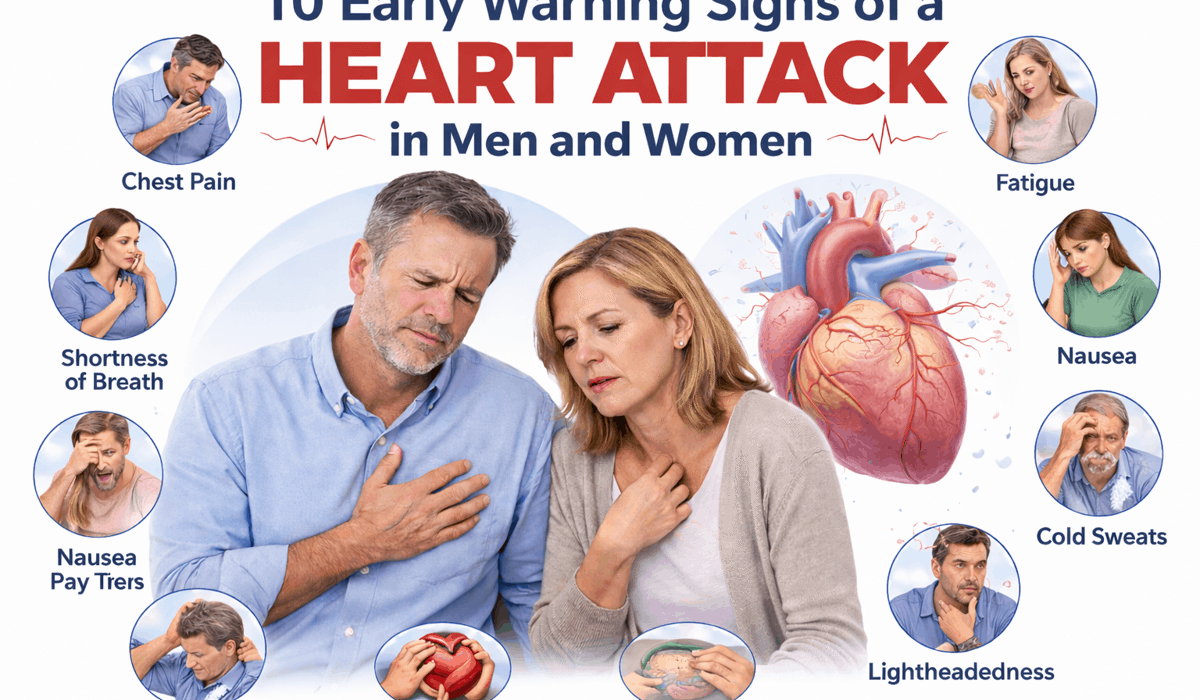
10 Early Warning Signs of a Heart Attack in Men and Women
This article is medically reviewed by Dr. Ajay Patel, MD, a Board-Certified Internal Medicine Physician (USA), for accuracy, clinical relevance, and adherence to current medical guidelines.
The early warning signs of a heart attack often appear before a major cardiac event. Many people ignore these symptoms or confuse them with stress, fatigue, or digestive issues. This delay increases heart damage and raises the risk of death.
Heart attack symptoms do not appear the same in everyone. Men often report chest pain, while women may experience subtle signs such as fatigue or nausea. Understanding these differences helps people seek medical care faster.
Recognizing the early signs of a heart attack can save lives. Immediate medical attention restores blood flow and reduces long-term complications.
What Is a Heart Attack?
A heart attack occurs when blood flow to the heart muscle becomes blocked. This blockage usually forms due to plaque buildup and blood clots in the coronary arteries. Without oxygen, the heart muscle starts to suffer damage.
Doctors refer to this condition as myocardial infarction. The damage begins within minutes and worsens without treatment. This makes a heart attack a medical emergency.
Chest discomfort caused by angina differs from a heart attack. Angina improves with rest, while heart attack symptoms persist or worsen.
Why Early Warning Signs Should Never Be Ignored
Early heart attack warning signs indicate reduced blood supply to the heart. These symptoms may appear hours, days, or even weeks before the event. Ignoring them allows the blockage to progress.
Early treatment lowers the risk of heart failure, rhythm disorders, and cardiac arrest. Fast action also improves survival and recovery outcomes.
Any unusual symptom related to the chest, breathing, or upper body requires medical evaluation.
Heart Attack Symptoms in Men and Women: Key Differences
Heart attack symptoms in men and women often differ in presentation. Men typically experience strong chest pressure or pain. Women may experience symptoms without chest pain, which delays diagnosis.
Understanding these differences improves early recognition. The table below highlights common variations.
| Symptom | Men | Women |
|---|---|---|
| Chest pain or pressure | Very common | May be mild or absent |
| Shortness of breath | Common | Very common |
| Unusual fatigue | Less common | Very common |
| Nausea or vomiting | Occasional | Frequent |
| Jaw or back pain | Occasional | Common |
These differences explain why heart attack symptoms in women often go unnoticed.
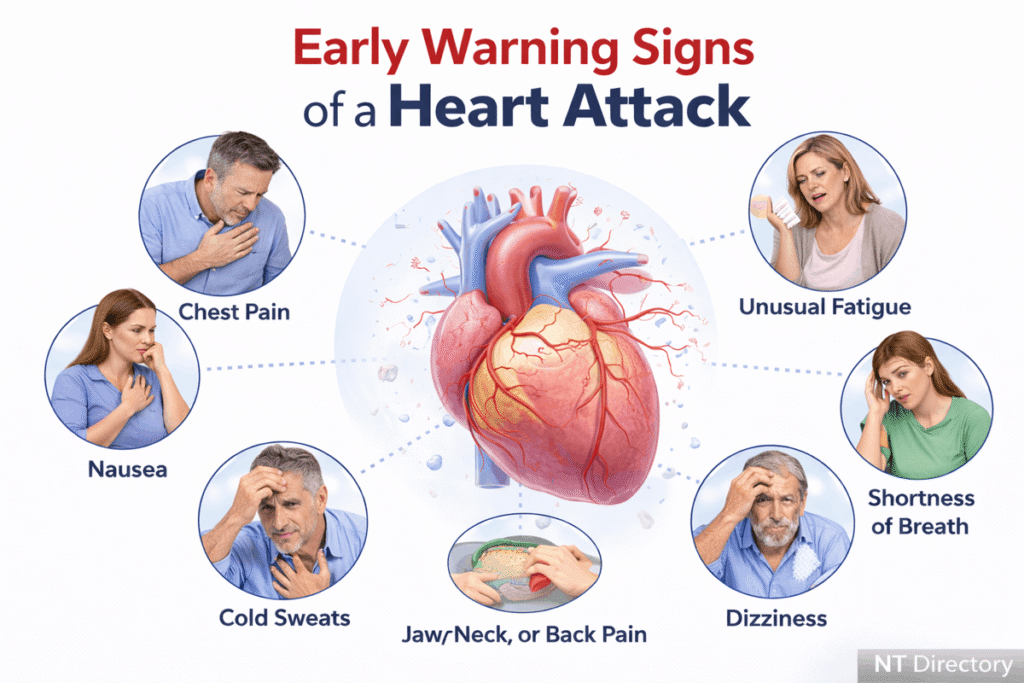
Early Warning Signs of a Heart Attack
Chest Pain or Pressure
Chest pain remains the most common heart attack symptom. People describe it as pressure, tightness, squeezing, or heaviness in the center or left side of the chest. The discomfort may last several minutes or come and go.
The pain may spread to the arm, neck, jaw, or back. Rest does not always relieve the discomfort. Persistent chest pain requires immediate medical care.
Target keywords used: chest pain heart attack, signs of a heart attack
Shortness of Breath
Shortness of breath can occur with or without chest pain. Some people experience breathing difficulty during rest or mild activity. This symptom indicates reduced oxygen delivery to the heart.
Women report breathlessness more frequently than men during early heart attack stages. Sudden or unexplained breathing difficulty needs urgent evaluation.
Target keywords used: shortness of breath heart attack, early heart attack symptoms
Unusual Fatigue
Unusual fatigue often appears days before a heart attack. People feel extreme tiredness without physical exertion. This symptom occurs more often in women.
Persistent fatigue may signal poor blood circulation to the heart. Fatigue combined with other warning signs increases cardiac risk.
Target keywords used: unusual fatigue heart attack, early warning signs of heart attack
Nausea or Indigestion-Like Discomfort
Some people mistake heart attack symptoms for stomach problems. Nausea, vomiting, or upper abdominal discomfort may occur suddenly. These symptoms appear more frequently in women.
Digestive discomfort without a clear cause or relief should raise concern. This sign often accompanies other early heart attack symptoms.
Target keywords used: nausea heart attack, heart attack symptoms in women
Cold Sweats
Cold sweats occur due to stress hormone release during reduced blood flow. People may sweat heavily without heat exposure or physical effort. The skin often feels cold and clammy.
This symptom frequently appears with chest discomfort or dizziness. Sudden sweating without explanation requires immediate attention.
Target keywords used: cold sweats heart attack, early warning signs
Pain Radiating to Arm, Jaw, or Back
Heart attack pain often spreads beyond the chest. It may travel to the left arm, shoulder, jaw, neck, or upper back. Some people experience pain only in these areas.
Jaw and back pain occur more often in women. Any unexplained radiating pain should never be ignored.
Target keywords used: jaw pain heart attack, radiating pain heart attack
Lightheadedness or Dizziness
Lightheadedness develops when the heart struggles to pump blood effectively. People may feel faint, dizzy, or unsteady. This symptom can appear suddenly.
Dizziness combined with chest discomfort or breathlessness indicates a serious problem. Immediate medical care becomes essential.
Target keywords used: dizziness heart attack, early heart attack signs
Silent Heart Attack Symptoms
Some heart attacks occur without classic symptoms. These silent heart attacks cause mild or unnoticed signs such as fatigue or shortness of breath. Many people remain unaware until later testing.
Silent heart attacks occur more frequently in women and people with diabetes. Regular health checkups help identify hidden cardiac damage.
Target keywords used: silent heart attack symptoms
Atypical Symptoms in Women
Women often experience non-classic heart attack symptoms. These include fatigue, nausea, anxiety, and upper back pain. Chest pain may not appear at all.
These atypical signs explain delayed treatment in many women. Awareness improves early diagnosis and survival.
Target keywords used: heart attack symptoms in women, women heart attack without chest pain
What to Do If You Notice Early Heart Attack Symptoms
Early action makes a critical difference during a heart attack. Many people wait to see if symptoms pass. This delay increases heart muscle damage and lowers survival chances.
If chest discomfort, breathlessness, or unexplained fatigue appears suddenly, treat it as serious. Do not ignore symptoms because they seem mild. Heart attacks often begin with subtle warning signs.
Sit or lie down in a safe position and stay calm. Avoid physical exertion. Stress increases the heart’s workload and can worsen symptoms.
If symptoms persist for more than a few minutes, seek emergency medical help immediately. Do not attempt self-treatment or home remedies.
When to Call Emergency Services Immediately
Some heart attack symptoms require urgent action without delay. Waiting for symptoms to improve can be dangerous.
Call emergency services right away if any of the following occur:
- Chest pain or pressure lasting more than five minutes
- Shortness of breath at rest
- Pain spreading to the arm, jaw, neck, or back
- Sudden dizziness or fainting
- Cold sweats with chest discomfort
Driving yourself to the hospital is risky. Emergency responders provide life-saving treatment on the way.
Why Delaying Treatment Is Dangerous
Heart muscle damage starts within minutes of blocked blood flow. The longer the delay, the greater the damage. Early treatment restores circulation and limits permanent injury.
Delayed care increases complications such as heart failure, rhythm disorders, and cardiac arrest. Recovery becomes longer and more difficult.
Many people delay because symptoms do not match expectations. This mistake proves especially dangerous for women and older adults.
Silent Heart Attacks: A Hidden Risk
Not all heart attacks cause severe chest pain. Some occur with mild or unnoticed symptoms. Doctors refer to these events as silent heart attacks.
Common silent heart attack symptoms include unexplained fatigue, shortness of breath, or mild chest discomfort. Many people dismiss these signs as stress or aging.
Silent heart attacks occur more often in women, older adults, and people with diabetes. Regular health checkups help detect previous silent damage.
Ignoring subtle symptoms can lead to repeat or more severe cardiac events later.
Heart Attack vs Panic Attack: Key Differences
Heart attacks and panic attacks share similar symptoms. Both can cause chest discomfort, breathlessness, and sweating. This overlap causes confusion and delays care.
Heart attack symptoms often worsen with activity and do not improve with rest. Pain may spread to the arm, jaw, or back. Panic attacks usually peak quickly and improve with calming measures.
Chest pain during a heart attack often feels heavy or squeezing. Panic-related chest discomfort often feels sharp or fleeting.
When in doubt, treat symptoms as a heart attack. Seeking emergency care is always the safer option.
Risk Factors That Increase Heart Attack Danger
Certain factors increase the likelihood of a heart attack. Recognizing these risks improves early detection.
Major risk factors include:
- High blood pressure
- High cholesterol
- Diabetes
- Smoking
- Obesity
- Family history of heart disease
People with multiple risk factors should remain especially alert to early warning signs.
Early Warning Signs in High-Risk Groups
Some groups experience heart attack symptoms differently. These variations increase the chance of delayed diagnosis.
Heart Attack Signs in Women
Women often experience fatigue, nausea, and back pain before a heart attack. Chest pain may appear mild or absent. These subtle signs lead many women to delay medical care.
Heart Attack Signs in Older Adults
Older adults may experience confusion, dizziness, or weakness rather than chest pain. Symptoms may appear suddenly and progress quickly.
Heart Attack Signs in People With Diabetes
People with diabetes often experience silent or mild symptoms. Nerve damage can reduce pain perception. Regular monitoring and awareness remain essential.
Why Awareness Improves Survival
Awareness helps people act faster and seek medical help earlier. Early recognition shortens response time and improves outcomes.
Education also helps family members identify symptoms in others. Quick action during the early stages saves lives.
Public awareness reduces preventable heart-related deaths. Understanding symptoms remains the strongest defense.
What Happens After Emergency Treatment
Doctors use medications and procedures to restore blood flow. These may include clot-dissolving drugs or catheter-based treatments.
Early treatment limits heart damage and improves long-term heart function. Recovery depends on how quickly treatment begins.
Lifestyle changes and follow-up care play a major role after a heart attack. Early diagnosis improves both short-term and long-term outcomes.
Common Myths About Heart Attack Symptoms
Many people hold incorrect beliefs about heart attacks. These myths delay treatment and increase risk. Clearing confusion helps people respond correctly.
One common myth suggests that heart attacks always cause severe chest pain. In reality, many people experience mild or no chest discomfort. Women often experience non-classic symptoms.
Another myth suggests that young people do not get heart attacks. Heart disease can affect adults of any age, especially those with risk factors such as smoking, obesity, or family history.
Some people believe symptoms must be dramatic to indicate danger. Subtle signs such as fatigue or breathlessness often appear first. Ignoring these signs can be fatal.
Can a Heart Attack Feel Like Indigestion?
Many heart attacks mimic digestive discomfort. Upper abdominal pressure, nausea, or bloating can appear suddenly. This confusion leads people to delay care.
Digestive discomfort linked to a heart attack does not improve with antacids or rest. It may occur with sweating, dizziness, or shortness of breath.
Any unexplained stomach discomfort combined with other symptoms requires urgent medical attention.
Heart Attack Symptoms at Night or During Rest
Heart attack symptoms do not only appear during physical activity. Many people experience symptoms at night or while resting. Sudden chest pressure or breathlessness during sleep is dangerous.
Waking up with chest discomfort, sweating, or nausea should raise concern. These signs often indicate reduced blood flow to the heart.
Nighttime symptoms require immediate medical evaluation.
How Long Do Early Heart Attack Symptoms Last?
Early warning signs vary in duration. Some symptoms last a few minutes, while others appear intermittently over hours or days. Chest discomfort may come and go.
Fatigue, breathlessness, or nausea may persist longer. These symptoms often worsen over time.
Any recurring or worsening symptom should prompt immediate medical care.
What to Do While Waiting for Emergency Help
Once emergency services are contacted, remain calm and limit movement. Sit or lie down in a comfortable position. Avoid exertion.
Loosen tight clothing and maintain normal breathing. If prescribed heart medication exists, follow medical advice only.
Do not ignore symptoms while waiting. Emergency responders provide critical care on arrival.
Preventing Further Damage After Early Warning Signs
Early warning signs indicate heart stress. Medical evaluation helps identify blockages or reduced blood flow. Timely diagnosis prevents future cardiac events.
Doctors may recommend tests such as ECG, blood markers, or imaging. Treatment depends on findings and severity.
Lifestyle changes support recovery and long-term heart health. These changes include diet improvement, physical activity, and stress control.
Long-Term Prevention After a Cardiac Event
Preventing another heart attack requires consistent care. Medications help control blood pressure, cholesterol, and clot formation. Adherence improves outcomes.
Follow-up visits monitor heart function and recovery progress. Cardiac rehabilitation programs support physical and emotional recovery.
Healthy habits reduce future risk and improve quality of life.
Frequently Asked Questions
What are the first signs of a heart attack?
The first signs often include chest pressure, shortness of breath, unusual fatigue, nausea, and sweating. Symptoms vary between individuals.
Are heart attack symptoms different in women?
Yes. Women often experience fatigue, nausea, back pain, or breathlessness instead of strong chest pain. These differences delay diagnosis.
Can a heart attack happen without chest pain?
Yes. Silent heart attacks occur without classic chest discomfort. Fatigue or breathlessness may be the only signs.
When should emergency services be contacted?
Emergency services should be contacted immediately if chest discomfort lasts more than a few minutes or appears with breathlessness, dizziness, or sweating.
Can stress or anxiety cause heart attack symptoms?
Stress and anxiety can mimic heart attack symptoms. When uncertain, emergency evaluation remains the safest choice.
Key Takeaways to Remember
Heart attacks often provide early warning signs. These signs vary between men and women. Chest pain is common but not always present.
Ignoring subtle symptoms delays treatment and increases complications. Early medical care saves lives and reduces heart damage.
Awareness empowers people to act quickly and confidently.
Final Conclusion
The early warning signs of a heart attack should never be ignored. Subtle symptoms often appear before severe damage occurs. Men and women experience these signs differently.
Recognizing chest discomfort, breathlessness, fatigue, nausea, and radiating pain allows faster response. Immediate medical care improves survival and recovery.
Knowledge remains the strongest protection against heart attack complications. Acting early can save a life.