Best Hair Transplant Options for Men in 2026: FUE vs FUT vs DHI
This article is medically reviewed by Dr. Ajay Patel, MD, a Board-Certified Internal Medicine Physician (USA), for accuracy, clinical relevance, and adherence to current medical guidelines.
Hair loss affects millions of men worldwide. By 2026, hair transplant technology has become safer, more precise, and more natural-looking than ever before. Men no longer need to live with receding hairlines or thinning crowns. Advanced techniques now offer permanent and predictable solutions.
The most common question men ask is simple.
Which hair transplant method is best – FUE, FUT, or DHI?
The honest answer depends on multiple factors. Hair loss pattern matters. Donor hair quality matters. Budget matters. Recovery time matters. This guide explains everything clearly. It helps you choose the right technique based on facts, not marketing claims.
Why Hair Transplant Demand Is Rising in 2026
Men today seek early treatment for hair loss. Social media, video calls, and professional image awareness drive this trend. Medical awareness has also improved. Men now understand that hair transplantation offers permanent results when done correctly.
Key reasons behind rising demand include:
- Improved natural-looking results
- Faster recovery time
- Minimal scarring techniques
- Better hairline design tools
- Safer anesthesia protocols
Clinics now focus on personalized planning. Surgeons no longer follow one-method-fits-all approaches. They select techniques based on individual scalp analysis and long-term hair loss patterns.
How Hair Transplant Works in Simple Terms
A hair transplant relocates healthy hair follicles from a donor area to bald or thinning areas. The donor area usually sits at the back or sides of the scalp. These hairs resist the hormone DHT. That resistance makes them permanent after transplantation.
The transplant process follows four basic steps:
- Donor area preparation
- Hair follicle extraction
- Recipient area design
- Graft implantation
Modern techniques differ mainly in how doctors extract and implant hair follicles. The survival of these follicles determines final density and appearance.
The 3 Main Hair Transplant Techniques Explained
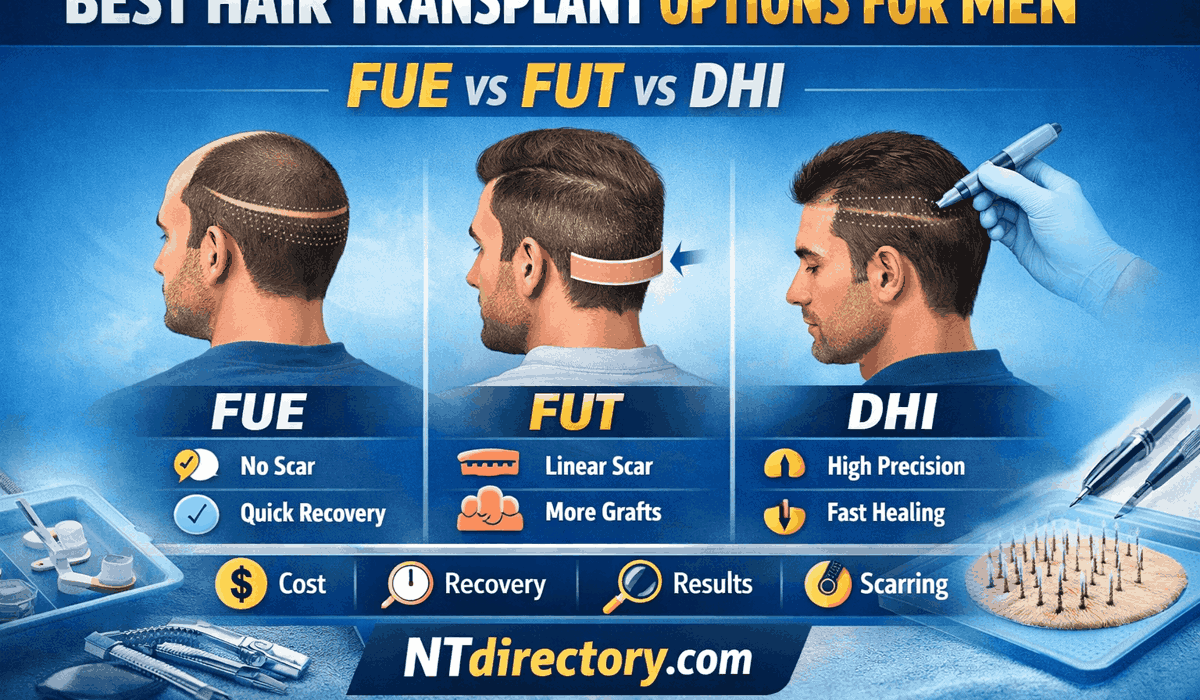
Men in 2026 usually choose between three advanced methods:
- FUE (Follicular Unit Extraction)
- FUT (Follicular Unit Transplantation)
- DHI (Direct Hair Implantation)
Each method has unique advantages and limitations. Understanding these differences helps you make an informed decision.
What Is FUE Hair Transplant?
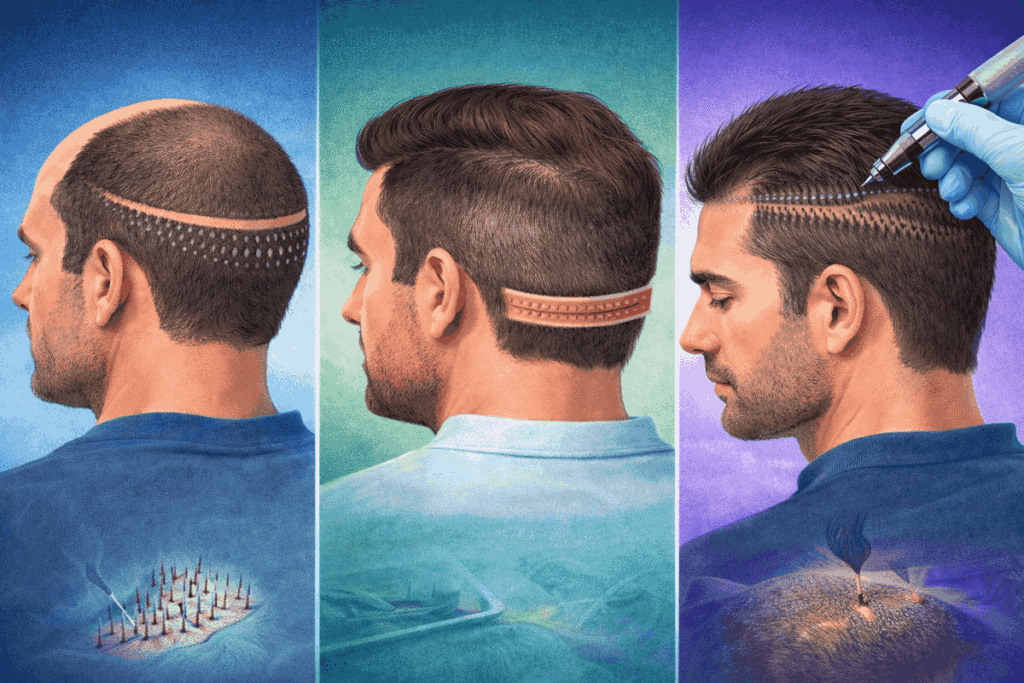
FUE stands for Follicular Unit Extraction. It is the most widely used technique today. In FUE, surgeons extract individual hair follicles directly from the donor area using micro punches. Each punch measures less than one millimeter.
The surgeon then implants these follicles into tiny incisions in the bald area. This method avoids linear scars. It leaves tiny dot scars that remain nearly invisible after healing.
Key benefits of FUE include:
- No stitches
- Minimal scarring
- Faster healing
- Suitable for short hairstyles
- Flexible donor area usage
FUE works well for men with mild to moderate hair loss. It also suits men who prefer short haircuts. Recovery usually takes 5 to 10 days. Most men return to work within a week.
However, FUE may require longer sessions for large bald areas. The cost per graft is often higher than FUT. Surgeon skill plays a major role in results.
What Is FUT Hair Transplant?
FUT stands for Follicular Unit Transplantation. Many people also call it the strip method. In FUT, surgeons remove a thin strip of scalp from the donor area. They then divide this strip into individual grafts under a microscope.
After extraction, the surgeon closes the donor area with sutures. This closure leaves a linear scar. Hair usually covers this scar if worn at medium or longer length.
FUT offers important advantages:
- Higher graft yield in one session
- Lower cost per graft
- Shorter extraction time
- Strong graft survival
FUT works best for men with advanced baldness. It suits those who need a large number of grafts in one sitting. Men who wear longer hair styles usually hide the linear scar easily.
However, FUT involves stitches. Recovery takes longer than FUE. The scar limits very short hairstyles.
What Is DHI Hair Transplant?
DHI stands for Direct Hair Implantation. It is an advanced form of FUE. The extraction process remains similar to FUE. The difference appears during implantation.
In DHI, surgeons use a specialized implanter pen. This tool allows direct placement of follicles into the scalp without creating incisions beforehand. The pen controls depth, angle, and direction.
Major advantages of DHI include:
- Highly precise hairline design
- Reduced handling of grafts
- Minimal trauma to scalp tissue
- Faster implantation process
DHI works extremely well for frontal hairlines and temple restoration. It offers excellent control for natural-looking density. Recovery time is often shorter than FUE.
However, DHI costs more. It requires highly trained surgeons. Large bald areas may require multiple sessions.
Quick Comparison of Hair Transplant Techniques
| Factor | FUE | FUT | DHI |
|---|---|---|---|
| Scarring | Tiny dot scars | Linear scar | Tiny dot scars |
| Recovery | 5–10 days | 10–14 days | 3–7 days |
| Cost | Medium | Lower | Higher |
| Hairline Precision | High | Medium | Very high |
| Best For | Moderate hair loss | Advanced baldness | Hairline refinement |
Which Technique Should You Consider First?
There is no universal winner. FUE offers balance. FUT delivers volume. DHI provides precision. The right choice depends on your hair loss stage and long-term plan.
A professional scalp evaluation remains essential. The best clinics assess donor density, scalp laxity, hair caliber, and future hair loss risk before recommending a technique.
Making the right decision early improves results. It also prevents overharvesting and unnatural density patterns.
Choosing a technique does not end with understanding how it works. Most men care more about results, recovery, pain, and visible scars. These factors decide satisfaction after surgery. In 2026, patients expect natural density, minimal downtime, and discreet healing.
Hair Transplant Results: Density, Natural Look, and Longevity
The final result of a hair transplant depends on three factors. Technique matters. Surgeon skill matters more. Patient planning matters most. When clinics follow proper protocols, all three methods can deliver permanent and natural-looking results.
FUE produces consistent density across the scalp. It works well for frontal, mid-scalp, and crown restoration. When surgeons angle grafts correctly, the result blends smoothly with existing hair.
FUT delivers a high number of grafts in a single session. This makes it suitable for advanced baldness. Many clinics prefer FUT when maximum coverage is the priority. Density looks natural when the hair grows longer.
DHI excels in hairline design. The implanter pen allows exact control over angle and direction. This precision creates soft, irregular hairlines that mimic natural growth. Men seeking cosmetic refinement often prefer this method.
All three techniques offer permanent results because transplanted hairs retain DHT resistance. However, untreated native hair may continue to thin. Doctors often recommend medical therapy alongside surgery to maintain overall density.
Hairline Design and Aesthetic Control
Hairline design defines success. A poorly designed hairline looks artificial, regardless of technique. Modern clinics focus on age-appropriate hairlines rather than low or aggressive designs.
DHI provides the highest control for hairline creation. The implanter pen allows surgeons to implant grafts at precise angles without prior incisions. This helps create soft transitions and irregular patterns.
FUE also supports excellent hairline design. Surgeons manually control incision direction before implantation. Skilled hands achieve natural results comparable to DHI.
FUT relies on similar implantation principles as FUE. Hairline quality depends entirely on surgical expertise rather than extraction method.
Scarring Comparison and Donor Area Management
Scarring remains a major concern for men considering hair transplantation. Each technique leaves a different type of scar.
FUE creates tiny circular scars. These scars remain scattered across the donor area. They usually become invisible after healing, even with short haircuts.
DHI uses the same extraction method as FUE. The scarring pattern remains identical. The implantation method does not affect donor scars.
FUT leaves a linear scar. Surgeons close the donor area using sutures or staples. The scar width depends on scalp laxity and closure technique. Hair length of at least one centimeter usually conceals it.
Proper donor management protects future transplant options. Overharvesting weakens donor density and limits repeat procedures. Experienced clinics calculate safe extraction limits before surgery.
Recovery Time and Return to Daily Life
Recovery speed matters for working professionals. Most men want to return to normal routines quickly. In 2026, faster healing protocols and improved post-op care reduce downtime.
DHI offers the fastest recovery. Patients often resume desk work within three to five days. Minimal incision trauma speeds healing.
FUE recovery takes slightly longer. Redness and scabbing usually resolve within seven to ten days. Most patients return to work within a week.
FUT recovery takes more time. Sutures remain in place for ten to fourteen days. Physical activity restrictions last longer due to the linear incision.
Swelling may occur with all techniques. Clinics manage it using medication and positioning advice. Proper aftercare reduces complications significantly.
Pain Level and Comfort During Surgery
Pain anxiety stops many men from pursuing treatment. Modern hair transplantation uses local anesthesia. Patients remain awake but comfortable.
FUE causes mild discomfort during anesthesia injection. Patients feel minimal pain during extraction and implantation.
DHI feels similar to FUE. The implanter pen reduces repeated incisions, which improves comfort for some patients.
FUT may involve slightly more discomfort after surgery. The sutured donor area can feel tight for several days. Pain medication manages this effectively.
Most patients describe the experience as tolerable. Clinics now focus heavily on patient comfort.
Growth Timeline and What to Expect
Hair growth follows a predictable pattern after transplantation. Understanding this timeline prevents unnecessary worry.
Transplanted hairs usually shed within two to four weeks. This shedding is normal. New growth begins around three months.
Visible density improves between six and nine months. Final results appear around twelve months. Crown areas may take slightly longer.
DHI and FUE show similar growth timelines. FUT results also follow the same biological process.
Patience plays a key role. Hair transplantation delivers gradual improvement, not instant results.
Cost Comparison and Value Assessment
Cost varies widely by location, clinic reputation, and graft count. Technique also affects pricing.
FUT remains the most cost-effective option for large sessions. It offers lower cost per graft.
FUE costs more due to longer extraction time and labor intensity.
DHI costs the most. Specialized tools and surgeon involvement increase expense.
| Technique | Relative Cost | Value Focus |
|---|---|---|
| FUT | Lower | High graft volume |
| FUE | Medium | Balanced results |
| DHI | Higher | Precision and aesthetics |
Value matters more than price. Poor results cost more in the long run. Always evaluate surgeon experience and long-term planning.
Common Mistakes Men Should Avoid
Many men choose clinics based on price alone. This leads to poor outcomes. Others chase trendy techniques without medical evaluation.
Avoid clinics that promise guaranteed density. Avoid aggressive hairline designs. Avoid overharvesting the donor area.
The best results come from realistic expectations and proper planning.
Selecting the right technique also depends on who you are as a candidate. Not every method suits every man. Hair loss pattern, donor strength, age, and future hair loss risk all play critical roles. Clinics that ignore these factors often deliver poor long-term results.
Who Is the Right Candidate for Hair Transplant in 2026
Hair transplantation works best when doctors plan for the future, not just current baldness. Male pattern baldness progresses over time. A good plan accounts for that progression.
Men with stable hair loss and strong donor density make ideal candidates. Those with ongoing aggressive hair loss need careful planning and medical support.
Doctors evaluate candidates based on:
- Age and family history
- Degree of baldness
- Donor hair density and thickness
- Scalp elasticity
- Overall health
Younger men need conservative hairline designs. Aggressive restoration at a young age often leads to unnatural patterns later.
Matching Techniques to Hair Loss Patterns
Different baldness patterns require different approaches. One technique does not fit all cases.
Receding hairline and temples
DHI works exceptionally well for frontal hairlines. It offers high precision and natural angles. FUE also performs well when done by experienced surgeons.
Crown thinning
FUE remains the preferred option for crown restoration. It distributes grafts evenly and preserves donor supply. FUT may help if a high graft count is required.
Advanced baldness (Norwood 5–7)
FUT often becomes necessary in advanced cases. It allows maximum graft harvesting in one session. Surgeons may combine FUT with FUE to increase total coverage.
Diffuse thinning
Careful planning is essential. Overharvesting can worsen appearance. FUE with conservative density works best.
Graft Planning and Density Strategy
Successful hair transplantation depends on smart graft allocation. Density must look natural and sustainable.
Natural scalp density ranges between 80 to 100 follicular units per square centimeter. Transplanted density usually targets 35 to 45 units per square centimeter. This density creates the illusion of fullness without exhausting the donor area.
Surgeons prioritize areas in this order:
- Frontal hairline
- Mid-scalp
- Crown
Placing too many grafts in the crown often reduces frontal density. Good planning balances visual impact.
Donor Area Limitations and Long-Term Planning
The donor area provides limited resources. Once overharvested, it cannot regenerate. Poor planning leads to patchy donor zones and visible thinning.
FUE and DHI allow selective harvesting. This helps preserve donor appearance. FUT extracts hair from a defined strip, which limits donor damage but leaves a scar.
Clinics calculate safe extraction percentages before surgery. Ethical clinics refuse procedures when donor supply remains insufficient.
Men with weak donor areas may consider:
- Beard hair transplantation
- Body hair transplantation
- Combination approaches
These options require advanced expertise.
Risks and Possible Complications
Hair transplantation is a surgical procedure. While safe, it carries potential risks. Understanding them builds realistic expectations.
Common temporary issues include:
- Swelling
- Redness
- Itching
- Mild pain
Less common complications include:
- Infection
- Folliculitis
- Poor graft growth
- Shock loss
Shock loss refers to temporary shedding of existing hair near the transplant area. Hair often regrows within months.
Choosing an experienced clinic reduces these risks significantly.
Safety Protocols in Modern Clinics
Clinics in 2026 follow strict medical standards. Safety begins before surgery and continues through recovery.
Key safety measures include:
- Detailed medical history review
- Blood tests
- Sterile surgical environment
- Trained surgical team
- Post-operative monitoring
Modern clinics use advanced magnification tools. These tools protect graft integrity and improve survival rates.
Role of Surgeon Skill Over Technique
Technique alone does not guarantee success. Surgeon expertise remains the most important factor.
A skilled surgeon:
- Designs natural hairlines
- Controls graft angle and direction
- Manages donor area responsibly
- Plans for future hair loss
Many poor results come from technician-led procedures without supervision. Always confirm who performs extraction and implantation.
Combining Hair Transplant with Medical Therapy
Hair transplantation treats existing bald areas. It does not stop future hair loss. Medical therapy helps protect native hair.
Doctors often recommend:
- DHT-blocking medications
- Hair growth stimulants
- PRP therapy
Combining surgery with medical management improves long-term results and delays further thinning.
Psychological and Lifestyle Considerations
Hair restoration improves confidence. However, unrealistic expectations cause disappointment.
Men should understand:
- Results take time
- Density is cosmetic, not original
- Maintenance matters
Patients who follow aftercare instructions achieve better outcomes.
Preparing for Surgery: What Men Should Do
Preparation improves results and recovery.
Before surgery:
- Avoid smoking and alcohol
- Stop blood-thinning medications
- Follow clinic instructions
Mental preparation matters as much as physical readiness.
Proper aftercare plays a major role in final results. Even the best surgery can fail without correct post-operative care. Clinics in 2026 focus heavily on recovery protocols to protect grafts and improve growth.
Aftercare Guidelines for Best Hair Transplant Results
After surgery, the scalp remains sensitive. The first ten days matter the most. Patients must follow instructions strictly to avoid graft damage.
Common aftercare instructions include:
- Avoid touching or scratching the scalp
- Sleep with the head elevated
- Use prescribed medications only
- Avoid smoking and alcohol
- Protect the scalp from sunlight
Patients usually start gentle hair washing within two to three days. Clinics provide step-by-step washing instructions. Improper washing can dislodge grafts.
Exercise restrictions vary by technique. Light walking is safe after a few days. Heavy workouts should wait at least three to four weeks.
Hair Transplant Growth Timeline Explained Clearly
Hair transplant results appear gradually. Understanding the timeline reduces stress and unrealistic expectations.
0–10 days
Scabs form and fall off naturally. Redness decreases. Donor area heals.
2–4 weeks
Transplanted hair sheds. This phase is normal and temporary.
3–4 months
New hair growth begins. Hair appears thin and uneven.
6 months
Visible improvement occurs. Density starts filling in.
9–12 months
Final results appear. Hair thickens and matures.
Crown areas may take slightly longer. DHI, FUE, and FUT follow the same biological growth cycle.
Long-Term Maintenance After Hair Transplant
Hair transplantation restores lost hair. It does not stop future hair loss. Native hair may continue to thin over time.
Doctors often recommend long-term maintenance plans:
- DHT-control medication
- Growth-support treatments
- PRP sessions when required
Consistency matters. Men who follow maintenance advice preserve results longer and avoid patchy thinning.
Choosing the Right Hair Transplant Clinic
Clinic selection determines outcome more than technique choice. Men should research carefully before committing.
A reliable clinic should offer:
- Surgeon-led procedures
- Transparent graft counts
- Real patient before-after photos
- Clear pricing without hidden costs
- Long-term follow-up support
Avoid clinics that guarantee unrealistic density. Avoid centers that rush consultations. Ethical clinics explain limitations honestly.
Questions to Ask During Consultation
Asking the right questions protects you from poor decisions.
Important questions include:
- Who performs extraction and implantation?
- How many grafts do I need now and later?
- What technique suits my hair loss pattern?
- How will you manage future hair loss?
- What complications should I expect?
Clear answers signal professional practice.
Final Decision: FUE vs FUT vs DHI in 2026
Each technique serves a purpose.
- FUE offers balance. It suits most men. It provides natural results with minimal scarring.
- FUT delivers maximum graft numbers. It works well for advanced baldness and budget-focused patients.
- DHI offers precision. It excels in hairline design and cosmetic refinement.
There is no universal winner. The best technique matches your hair loss pattern, donor capacity, and long-term goals.
Frequently Asked Questions
1. Which hair transplant method is best in 2026?
There is no single best method. FUE suits most men, DHI offers precision, and FUT works best for advanced baldness.
2. Is DHI better than FUE?
DHI provides better control for hairline design. FUE offers versatility and lower cost.
3. Does FUT leave a permanent scar?
Yes. FUT leaves a linear scar. Hair usually covers it when worn longer.
4. How long does recovery take after hair transplant?
DHI takes about 3–5 days. FUE takes 5–10 days. FUT takes up to 14 days.
5. When will I see full hair transplant results?
Final results usually appear between 9 and 12 months.
6. Is hair transplant painful?
Modern procedures use local anesthesia. Most patients report minimal pain.
7. Can hair transplant fail?
Yes, if performed poorly or if aftercare is ignored. Choosing the right clinic reduces risk.
8. How many grafts do I need?
It depends on baldness level. Mild cases need 800–1,500 grafts. Advanced cases may need 3,000+ grafts.
9. Will transplanted hair fall again?
Transplanted hair usually remains permanent. Native hair may continue thinning.
10. Is hair transplant safe?
Yes, when performed by qualified surgeons following medical protocols.
Final Thoughts
Hair transplant in 2026 offers reliable and natural solutions for men facing hair loss. Technology has improved. Results have become predictable. Success depends on planning, surgeon skill, and realistic expectations.
Take time to evaluate your options. Choose expertise over price. Commit to aftercare and maintenance. The right decision today protects your appearance for years to come.