What Is the Most Common Type of Cancer in Men? Causes & Stats (2026)

This article is medically reviewed by Dr. Ajay Patel, MD, a Board-Certified Internal Medicine Physician (USA), for accuracy, clinical relevance, and adherence to current medical guidelines.
The most common cancer in men varies by region. Globally, lung cancer leads in total cases, while prostate cancer is the most frequently diagnosed cancer in men in many countries, including the U.S. Cancer incidence depends on age, screening practices, and lifestyle risk factors.
This difference often causes confusion. Incidence shows how many new cases appear. Mortality shows how many deaths occur. Both matter, but they tell different stories.
Male Cancer Statistics: Global Overview (2025 Context)
Male cancer statistics show clear global patterns. Some cancers dominate worldwide. Others rise due to early detection.
The data below reflects worldwide incidence trends used by major cancer registries.
| Cancer Type | Approx. Share of Male Cancer Cases | Global Rank |
|---|---|---|
| Lung cancer | Highest | #1 |
| Prostate cancer | Very high | #2 |
| Colorectal cancer | Moderate–high | #3 |
| Liver cancer | Moderate | #4 |
| Stomach cancer | Moderate | #5 |
Key takeaway:
Lung cancer leads worldwide by total cases. Prostate cancer follows closely and leads in many developed regions.
Primary keywords covered:
- most common cancer in men
- cancers in men
- male cancer statistics
Cancer Incidence vs Cancer Mortality in Men
Many articles mix incidence with mortality. This creates misleading conclusions.
| Cancer Type | Incidence in Men | Mortality in Men |
|---|---|---|
| Lung cancer | Very high | Very high |
| Prostate cancer | Very high | Lower than lung |
| Colorectal cancer | Moderate | Moderate |
| Liver cancer | Moderate | High |
Lung cancer causes the most cancer-related deaths in men. Prostate cancer shows high incidence but lower mortality when detected early.
Why Rankings Change by Country
Cancer rankings do not stay uniform across countries. Screening programs create early diagnosis spikes. Lifestyle risks vary by region.
In countries with routine PSA testing, prostate cancer appears more often. In regions with high tobacco use, lung cancer dominates.
| Region / Country | Most Common Cancer in Men |
|---|---|
| United States | Prostate cancer |
| Western Europe | Prostate cancer |
| China | Lung cancer |
| India | Lung / Oral cancers |
| Global total | Lung cancer |
This explains why global and national statistics differ.
Prostate Cancer Incidence: Why It Ranks So High
Prostate cancer incidence rises with age. Men over 50 face the highest risk. Screening identifies many early-stage cases.
This does not mean prostate cancer spreads faster than others. It means detection happens earlier and more often.
| Age Group | Relative Prostate Cancer Risk |
|---|---|
| Under 40 | Very low |
| 40–49 | Low |
| 50–59 | Moderate |
| 60–69 | High |
| 70+ | Very high |
Early detection shifts statistics upward. It also improves survival outcomes.
Lung Cancer in Men: Why Global Numbers Stay High
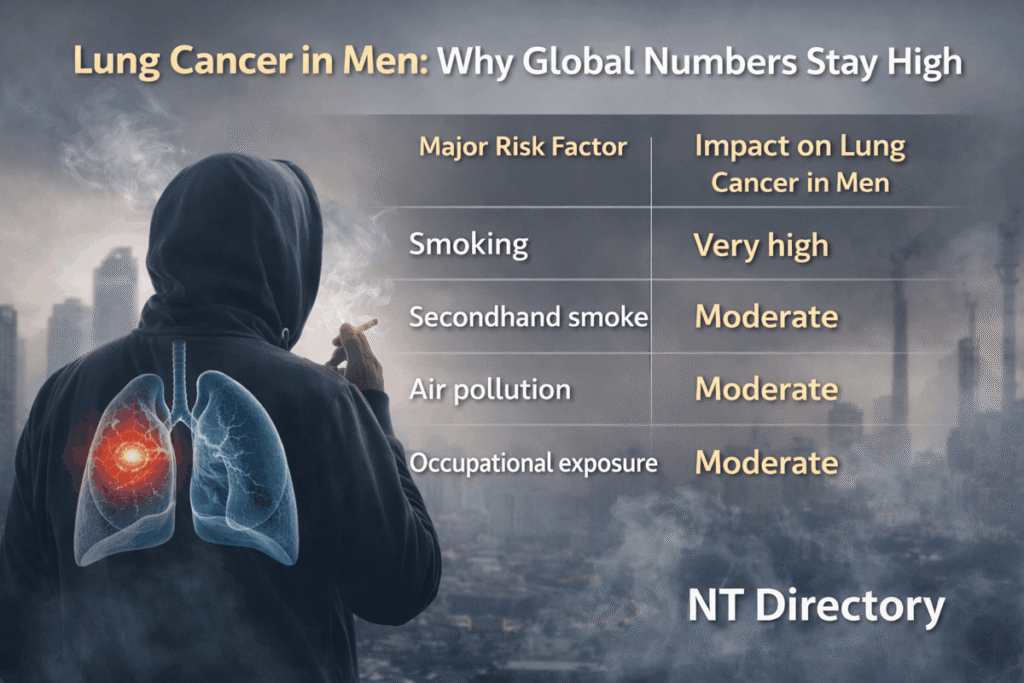
Lung cancer remains common due to exposure patterns. Smoking plays a major role. Air pollution adds risk in urban regions.
Many men receive diagnosis at advanced stages. This increases mortality rates.
| Major Risk Factor | Impact on Lung Cancer in Men |
|---|---|
| Smoking | Very high |
| Secondhand smoke | Moderate |
| Air pollution | Moderate |
| Occupational exposure | Moderate |
Late detection explains why lung cancer leads in deaths. Limited screening access worsens outcomes.
Where Colorectal Cancer Fits Among Male Cancers
Colorectal cancer ranks among the top cancers in men. Risk increases with age and lifestyle factors.
Diet, physical inactivity, and delayed screening raise incidence.
| Screening Method | Purpose |
|---|---|
| Colonoscopy | Detects polyps and cancer |
| FOBT | Detects hidden blood |
Screening lowers mortality when done on time.
Prostate Cancer vs Lung Cancer in Men – Causes, Risks, and Detection Impact
Prostate Cancer vs Lung Cancer: Why Both Rank at the Top
Prostate cancer and lung cancer dominate cancer statistics in men. They rise for different reasons. Detection patterns drive prostate cancer numbers. Risk exposure drives lung cancer numbers.
Understanding this contrast helps readers interpret male cancer statistics correctly.
| Factor | Prostate Cancer | Lung Cancer |
|---|---|---|
| Main driver | Screening & age | Smoking & exposure |
| Detection stage | Often early | Often late |
| Incidence | Very high | Very high |
| Mortality | Lower | Highest |
This contrast explains why both appear at the top of cancer rankings in men.
Why Prostate Cancer Incidence Continues to Rise
Prostate cancer incidence increases as populations age. Men live longer now. Screening identifies cancer earlier and more frequently.
PSA testing detects prostate changes before symptoms appear. This increases reported cases.
| Contributing Factor | Effect on Incidence |
|---|---|
| Aging population | Strong increase |
| PSA test use | Early detection |
| Family history | Higher risk |
| Genetics | Moderate impact |
Detection Does Not Equal Aggressiveness
Many prostate cancers grow slowly. Detection does not always mean immediate treatment. Doctors assess cancer behavior before action. This prevents unnecessary harm.
| Clinical Approach | Purpose |
|---|---|
| Active surveillance | Monitor slow-growing tumors |
| Radical prostatectomy | Remove aggressive cancer |
| Radiation therapy | Target localized disease |
Early diagnosis improves outcomes. It also increases reported incidence.
Why Lung Cancer Remains Widespread in Men
Lung cancer rates remain high due to exposure. Smoking remains the strongest risk factor. Environmental exposure adds risk.
Unlike prostate cancer, lung cancer lacks broad early screening.
| Risk Factor | Impact Level |
|---|---|
| Smoking | Very high |
| Secondhand smoke | Moderate |
| Air pollution | Moderate |
| Workplace toxins | Moderate |
Most diagnoses occur at later stages. This drives male cancer mortality.
Late Detection Drives Lung Cancer Death Rates
Symptoms often appear late. Early disease stays silent.
By diagnosis, spread often occurs.
| Detection Stage | Outcome |
|---|---|
| Early-stage | Better survival |
| Advanced-stage | Poor survival |
Limited screening keeps mortality high.
Prostate Cancer vs Lung Cancer: Survival Perspective
Survival rates differ sharply between these cancers.
| Cancer Type | Early Detection Impact |
|---|---|
| Prostate cancer | Strong survival improvement |
| Lung cancer | Limited improvement |
Screening changes outcomes. Early detection saves lives.
Role of Lifestyle in Both Cancers
Lifestyle shapes cancer risk strongly. Smoking raises lung cancer risk dramatically. Diet and physical activity influence prostate and colorectal cancer risk.
| Lifestyle Factor | Affected Cancer |
|---|---|
| Smoking cessation | Lung cancer |
| Diet balance | Prostate, colorectal |
| Regular exercise | Multiple cancers |
Lifestyle changes reduce long-term risk.
Colorectal Cancer in Men: The Shared Risk Pattern
Colorectal cancer shares risk factors with other male cancers. Incidence rises with age. Screening detects disease early.
| Screening Tool | Benefit |
|---|---|
| Colonoscopy | Early detection |
| FOBT | Risk identification |
Timely screening lowers mortality.
Most Common Cancers in Men by Country, Age Trends, and Symptoms
Most Common Cancers in Men by Country
Cancer patterns in men change by country. Healthcare access, screening, lifestyle, and environment shape these trends. Countries with routine screening report higher prostate cancer incidence. Countries with high tobacco exposure report higher lung cancer incidence.
| Country / Region | Most Common Cancer in Men | Primary Driver |
|---|---|---|
| United States | Prostate cancer | PSA screening, age |
| Western Europe | Prostate cancer | Screening access |
| China | Lung cancer | Smoking, pollution |
| India | Lung / Oral cancers | Tobacco use |
| Global total | Lung cancer | Worldwide exposure |
Cancer Incidence in Men by Age Group
Age strongly influences male cancer statistics. Risk rises steadily after midlife. Older men face the highest burden.
| Age Group | Most Common Cancer Pattern |
|---|---|
| Under 40 | Rare cancer occurrence |
| 40–49 | Early rise in risk |
| 50–59 | Prostate and colorectal increase |
| 60–69 | Prostate dominates |
| 70+ | Multiple cancers increase |
Prostate cancer incidence peaks after age 60. Lung and colorectal cancer risk also rises with age.
New Prostate Cancer Cases Per Year: What Drives the Numbers
Prostate cancer reports a large number of new cases each year. Screening contributes heavily to these figures. This does not mean aggressive disease appears in every case.
| Factor | Influence on Case Numbers |
|---|---|
| PSA screening | High detection |
| Aging male population | Rising incidence |
| Family history | Increased risk |
| Genetics | Moderate effect |
Early-stage detection increases survival outcomes. It also increases reported incidence.
Lung Cancer Trends Across Regions
Lung cancer remains common in men worldwide. Smoking remains the strongest risk factor. Environmental exposure adds to the burden.
| Exposure Type | Effect on Lung Cancer |
|---|---|
| Smoking | Very high |
| Secondhand smoke | Moderate |
| Air pollution | Moderate |
| Occupational toxins | Moderate |
Regions with high smoking prevalence show higher lung cancer rates. Limited screening keeps mortality high.
Colorectal Cancer in Men: A Growing Concern
Colorectal cancer ranks among the top cancers in men. Risk increases with age and lifestyle factors.
Diet patterns and physical inactivity raise risk. Screening detects disease early.
| Screening Method | Detection Benefit |
|---|---|
| Colonoscopy | Identifies early lesions |
| FOBT | Detects hidden bleeding |
Regular screening lowers death rates.
Symptoms of the Most Common Cancers in Men
Symptoms vary by cancer type. Some cancers remain silent early. Others show warning signs.
| Cancer Type | Common Symptoms |
|---|---|
| Prostate | Urinary changes, weak flow |
| Lung | Persistent cough, chest pain |
| Colorectal | Blood in stool, bowel changes |
| Liver | Fatigue, abdominal discomfort |
| Stomach | Appetite loss, indigestion |
Early symptoms often appear mild. Men delay evaluation in many cases.
Differences Between Cancers in Men and Women
Cancer patterns differ between men and women. Biology and lifestyle shape these differences.
| Factor | Men | Women |
|---|---|---|
| Most common cancer | Prostate / Lung | Breast |
| Smoking-related risk | Higher | Lower |
| Screening impact | Strong (PSA) | Strong (mammography) |
| Average diagnosis age | Older | Slightly younger |
These differences explain gender-based cancer rankings.
Diagnostic Pathways in Common Male Cancers
Diagnosis follows structured steps. Testing confirms disease presence.
| Diagnostic Tool | Purpose |
|---|---|
| PSA test | Prostate screening |
| Prostate biopsy | Tissue confirmation |
| Transrectal ultrasound | Imaging guidance |
| Imaging scans | Stage assessment |
Early diagnosis improves treatment outcomes.
Treatment Pathways, Prevention Strategies, and Key FAQs on Cancer in Men
How Common Cancers in Men Are Treated
Treatment depends on cancer type, stage, and overall health. Doctors choose approaches that balance control and quality of life. Early-stage cancers respond better to treatment. Late-stage cancers require broader strategies.
| Cancer Type | Common Treatment Options |
|---|---|
| Prostate cancer | Active surveillance, surgery, radiation |
| Lung cancer | Surgery, radiation, systemic therapy |
| Colorectal cancer | Surgery, chemotherapy, radiation |
Early detection improves treatment success.
Prostate Cancer Treatment Approaches
Prostate cancer often grows slowly. Doctors assess risk before treatment.
Low-risk cases may not need immediate intervention. Higher-risk cases require active treatment.
| Treatment Option | Purpose |
|---|---|
| Active surveillance | Monitor slow-growing cancer |
| Radical prostatectomy | Remove localized cancer |
| Radiation therapy | Target cancer cells |
Treatment choice depends on cancer behavior.
Lung Cancer Treatment in Men
Lung cancer treatment varies by stage. Surgery works best in early disease. Advanced cases need combined therapies.
Late diagnosis limits options. This explains higher male cancer mortality.
| Disease Stage | Typical Approach |
|---|---|
| Early stage | Surgery, radiation |
| Advanced stage | Multimodal treatment |
Colorectal Cancer Treatment Overview
Colorectal cancer treatment relies on early detection. Surgery removes localized disease. Advanced cases require systemic therapy.
| Detection Timing | Outcome |
|---|---|
| Early | High survival |
| Late | Reduced survival |
Screening plays a key role in outcomes.
Prevention Strategies for Common Cancers in Men
Many cancers in men link to modifiable risks. Lifestyle changes reduce risk significantly. Prevention does not guarantee protection. It lowers long-term probability.
| Preventive Measure | Cancer Risk Impact |
|---|---|
| Smoking cessation | Major lung cancer reduction |
| Balanced diet | Lower colorectal risk |
| Regular exercise | Reduced overall cancer risk |
| Screening adherence | Earlier detection |
Prevention supports long-term health.
Role of Screening in Reducing Cancer Impact
Screening identifies disease early. Early detection improves survival. Different cancers require different tools.
| Screening Method | Cancer Type |
|---|---|
| PSA test | Prostate cancer |
| Colonoscopy | Colorectal cancer |
| FOBT | Colorectal cancer |
Screening access shapes cancer statistics.
Frequently Asked Questions About the Most Common Cancer in Men
What is the most common cancer in men?
Globally, lung cancer records the highest number of new male cancer cases. In many countries with routine screening, prostate cancer ranks first by incidence. Geography and screening access explain this difference.
Is prostate cancer the most common cancer in men in 2026?
Prostate cancer remains the most frequently diagnosed cancer in men in many developed regions. Screening practices and aging populations drive these statistics.
Which cancer causes the most deaths in men?
Lung cancer causes the highest number of cancer-related deaths in men worldwide. Late diagnosis and high exposure risk contribute to this outcome.
At what age does prostate cancer risk increase?
Prostate cancer risk rises significantly after age 50. Incidence increases further after age 60 due to aging and higher screening rates.
Can lifestyle changes reduce cancer risk in men?
Lifestyle changes reduce risk. Smoking cessation, balanced diet, regular exercise, and screening lower the likelihood of advanced cancer diagnosis.
Key Takeaways: What Men Should Know About Cancer
The most common cancer in men varies by region and data source. Globally, lung cancer leads cancer incidence and male cancer mortality. In many countries, prostate cancer incidence ranks highest due to screening and aging populations. These patterns explain why the most common type of cancer in men differs across countries and years, including most common cancer in men 2025 statistics.
Early detection and prevention reduce risk among cancers in men. Screening such as PSA testing and colorectal screening improves outcomes. Lifestyle factors influence long-term trends in male cancer statistics. NT Directory focuses on clear, evidence-based health information that supports early awareness, screening, and informed decision-making for men.