What Is a Pulled Chest Muscle? Symptoms, Causes & Recovery
- BY Dr. Ajay Patel
- January 4, 2026
- 473 Views
This article is medically reviewed by Dr. Ajay Patel, MD, a Board-Certified Internal Medicine Physician (USA), for accuracy, clinical relevance, and adherence to current medical guidelines.
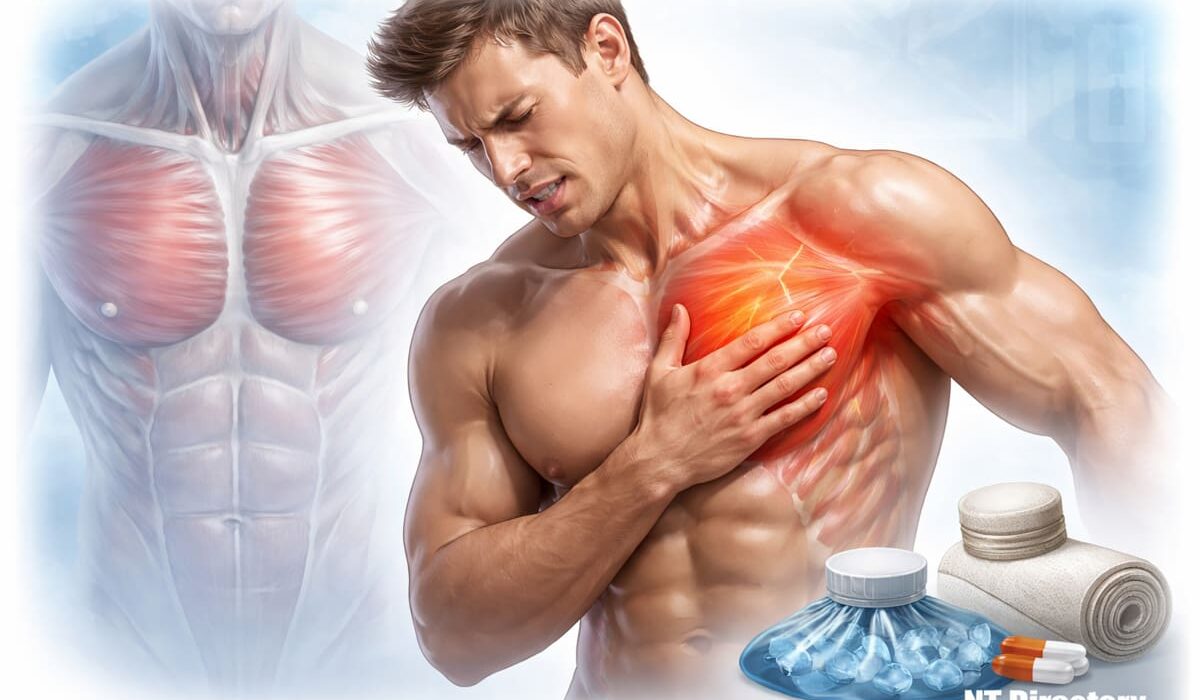
Chest pain often creates fear. Many people think of heart problems first. In reality, a pulled chest muscle causes a large share of non-cardiac chest pain. A pulled muscle in chest happens when muscle fibers stretch beyond their limit or tear. This condition also goes by chest muscle strain or muscle strain in chest.
A chest muscle injury can affect daily movement, breathing, sleep, and exercise. Pain may feel sharp, tight, or burning. It often worsens with motion, coughing, or deep breaths. Knowing how a pulled chest muscle feels helps you respond fast and avoid panic.
Can a Pulled Chest Muscle Cause Chest Pain?
Yes. You can pull a muscle in your chest. A pulled chest muscle causes localized pain that increases with movement, pressure, or deep breathing. Chest pain from muscle pull often feels sharp or sore and improves with rest. Unlike heart pain, pain in chest muscle strain usually stays in one area and hurts when touched.
What Is a Pulled Chest Muscle?
A pulled chest muscle occurs when chest wall muscles stretch or tear. The injury affects muscle fibers, not the heart or lungs. This condition falls under muscle injury chest and ranges from mild strain to severe tear.
Doctors classify a chest muscle strain by severity:
| Grade | Muscle Damage | Pain Level | Movement Impact |
|---|---|---|---|
| Grade 1 | Overstretching | Mild | Slight stiffness |
| Grade 2 | Partial tear | Moderate | Pain with movement |
| Grade 3 | Complete tear | Severe | Loss of strength |
Early care limits recovery time and prevents long-term stiffness.
Chest Muscle Anatomy Explained
Several muscles protect the chest wall. Injury to any can cause chest strain pain.
Main muscles involved
- Pectoralis major – controls pushing and lifting
- Pectoralis minor – stabilizes the shoulder
- Intercostal muscles – support breathing
- Serratus anterior – assists arm movement
A pectoral muscle pull often occurs during weight lifting. An intercostal muscle strain affects breathing and trunk rotation. A pectoralis strain may cause bruising or weakness.
Symptoms of a Pulled Chest Muscle
Symptoms vary by muscle and injury grade. Pulled chest muscle symptoms usually appear suddenly after activity.
Common symptoms
- Sharp or aching chest pain
- Tenderness on touch
- Pain with deep breathing
- Tightness across the chest
- Reduced arm strength
- Swelling or mild bruising
A strained chest muscles pain often increases when you twist, push, or lift.
Chest pain patterns by movement
| Action | Pain Response |
|---|---|
| Pressing on area | Pain increases |
| Deep breathing | Pain worsens |
| Arm movement | Pain increases |
| Rest | Pain reduces |
These signs strongly suggest chest pain from muscle pull rather than heart causes.
Symptoms of Pulled Chest Muscle in Female
Symptoms of pulled chest muscle female patients report often overlap with cardiac symptoms. This overlap increases anxiety and ER visits.
Common female-specific reports include:
- One-sided chest pain near breast tissue
- Pain during sleep position changes
- Discomfort while wearing bras
- Pain during coughing or sneezing
Hormonal changes and posture differences also affect muscle tension. Despite these differences, the injury remains a chest muscle strain, not a heart issue.
Early Warning Signs of a Severe Injury
Some signs point to a chest muscle tear rather than a simple strain.
| Warning Sign | Possible Meaning |
|---|---|
| Sudden popping sound | Muscle rupture |
| Rapid swelling | Internal bleeding |
| Visible chest deformity | Pectoralis major tear |
| Severe weakness | Full muscle tear |
These signs require urgent evaluation.
Why Chest Muscle Pain Gets Mistaken for Heart Pain
Many people ask: is sharp chest pain a pulled muscle? The answer depends on pattern. Muscle pain stays localized. Heart pain spreads, feels heavy, and often comes with sweating or nausea.
A pulled chest muscle hurts more with movement. Heart pain does not.
When Chest Muscle Pain Needs Medical Attention
You should seek care if:
- Pain does not improve after rest
- Swelling or bruising spreads
- Breathing becomes difficult
- Arm strength drops suddenly
These signs may indicate a serious chest muscle injury.
Causes of a Pulled Chest Muscle
A pulled chest muscle develops when muscle fibers face sudden force or repeated stress. These fibers stretch beyond safe limits. Small tears then trigger pain and inflammation. Many cases occur outside sports.
Common Causes of Chest Muscle Injury
| Cause | How It Leads to Injury |
|---|---|
| Heavy lifting | Sudden overload on chest muscles |
| Gym workouts | Poor form during pressing movements |
| Coughing or sneezing | Forceful chest wall contraction |
| Sudden twisting | Muscle fibers overstretch |
| Direct impact | Blunt trauma to chest wall |
| Poor posture | Ongoing muscle strain |
A pulled muscle in chest often occurs during daily tasks, not only workouts. Even reaching overhead or lifting children can cause muscle injury chest.
Sports and Gym-Related Chest Muscle Strain
Gym activities remain a leading cause of pectoral muscle pull. Chest muscles generate high force during pressing movements.
High-Risk Exercises
- Bench press
- Push-ups
- Chest fly machines
- Dips
- Explosive throwing motions
A pulled pectoral muscle often starts with a sharp pain during lifting. Many lifters report immediate weakness. Bench press pectoral injury symptoms include bruising near the armpit and reduced pushing strength.
Poor warm-up increases injury risk. Fatigue also plays a role.
Pulled Chest Muscle After Coughing or Illness
Strong coughing fits place repeated strain on chest muscles. A pulled chest muscle after coughing appears frequently during respiratory infections.
Risk increases when:
- Coughing lasts many days
- Muscles already feel tight
- Dehydration reduces muscle flexibility
This pattern commonly causes intercostal muscle strain. Pain worsens with breathing and twisting.
Pulled Chest Muscle vs Heart Pain
Many people search for how to know if chest pain is muscle or heart. This comparison matters. It prevents panic and delays in care.
Key Differences at a Glance
| Feature | Pulled Chest Muscle | Heart Pain |
|---|---|---|
| Pain location | One specific spot | Center or left chest |
| Pain type | Sharp or sore | Pressure or squeezing |
| Movement effect | Pain increases | No change |
| Touch sensitivity | Painful | Usually not |
| Rest effect | Improves | May persist |
| Radiation | Rare | Arm, jaw, back |
If pain worsens with arm movement or pressing the area, chest pain from muscle pull remains likely.
When Chest Pain Needs Emergency Care
Even with muscle strain signs, some symptoms require urgent attention.
Go to ER if pain comes with:
- Shortness of breath
- Sweating
- Nausea
- Dizziness
- Pain spreading to jaw or arm
These symptoms do not fit pain in chest muscle strain patterns. They require immediate evaluation.
Diagnosis of Chest Muscle Strain
Doctors diagnose a chest muscle strain through clinical assessment. Imaging supports diagnosis in severe cases.
Step 1: Physical Examination
The doctor checks:
- Pain location
- Swelling
- Range of motion
- Muscle strength
Pain that increases with movement supports muscle strain in chest.
Step 2: Imaging Tests (If Needed)
| Test | When Used | Purpose |
|---|---|---|
| Ultrasound | Suspected tear | Visualize muscle fibers |
| MRI | Severe pain or weakness | Detect full rupture |
| X-ray | Trauma cases | Rule out rib injury |
Most mild pulled chest muscle cases do not need imaging.
Chest Muscle Tear vs Simple Strain
A chest muscle tear causes more damage than a strain.
Signs Suggesting a Tear
- Sudden popping sensation
- Immediate swelling
- Bruising within hours
- Loss of strength
- Visible chest contour change
These signs raise concern for pectoralis major tear symptoms.
Risk Factors That Increase Chest Muscle Injury
Some people face higher risk of chest muscle sprain.
| Risk Factor | Why It Matters |
|---|---|
| Poor posture | Constant muscle tension |
| Weak core | Increased chest load |
| Skipping warm-up | Reduced muscle elasticity |
| Previous injury | Higher recurrence risk |
| Dehydration | Muscle stiffness |
Understanding these factors helps reduce recurrence of chest muscle strain.
Why Chest Muscle Strain Pain Worsens at Night
Many patients report pulled chest muscle pain at night. This occurs due to:
- Side sleeping pressure
- Reduced movement
- Muscle cooling and stiffness
Pain often improves after gentle movement in the morning.
Treatment for a Pulled Chest Muscle
Treatment depends on injury severity. Most pulled chest muscle cases heal without surgery. Early care reduces pain and speeds recovery.
First 48–72 Hours: Immediate Care
Early care limits swelling and prevents worsening of a chest muscle strain.
| Step | What to Do | Why It Helps |
|---|---|---|
| Rest | Stop painful activity | Prevents further muscle damage |
| Ice | 15–20 minutes, 3–4 times daily | Reduces swelling |
| Compression | Light wrap if tolerated | Limits inflammation |
| Elevation | Keep chest supported | Improves circulation |
This approach matches pulled chest muscle first aid RICE principles.
Avoid heat, massage, or stretching during this phase. These actions increase bleeding inside the muscle.
Pain Relief for Chest Muscle Strain
Pain control helps movement and breathing.
Safe pain management options
- Ice packs
- Acetaminophen
- Short-term anti-inflammatory use if advised
Pain from muscle strain in chest often improves within days. Worsening pain suggests complications.
How to Treat a Pulled Chest Muscle at Home
Many patients ask about how to treat a pulled chest muscle at home. Home care remains effective for mild to moderate injuries.
Home care guidelines
- Maintain upright posture
- Avoid heavy lifting
- Support chest during coughing
- Sleep on the back or uninjured side
These steps reduce chest strain pain and prevent re-injury.
Physical Therapy for Pulled Chest Muscle
Pulled chest muscle treatment physical therapy begins once pain reduces. Therapy restores strength and flexibility.
Goals of physical therapy
- Improve range of motion
- Restore muscle balance
- Reduce stiffness
- Prevent recurrence
Common physiotherapy phases
| Phase | Focus | Activities |
|---|---|---|
| Phase 1 | Pain-free motion | Gentle arm swings |
| Phase 2 | Light strength | Resistance bands |
| Phase 3 | Functional strength | Controlled pushing |
| Phase 4 | Return to activity | Sport-specific drills |
A structured program supports healing of pectoralis strain and intercostal muscle strain.
Pulled Chest Muscle Exercises to Regain Strength
Rehabilitation exercises start only after pain settles.
Safe early exercises
- Wall-assisted arm slides
- Shoulder blade squeezes
- Light chest opening stretches
Progression rules
- Stop if pain increases
- Increase load slowly
- Avoid explosive movements
These exercises support recovery from pulled pectoral muscle injuries.
Recovery Timeline for a Pulled Chest Muscle
Recovery time depends on strain grade.
| Injury Grade | Typical Healing Time | Activity Limits |
|---|---|---|
| Grade 1 | 1–3 weeks | Light movement only |
| Grade 2 | 4–6 weeks | No heavy lifting |
| Grade 3 | 8–12+ weeks | Rehab or surgery |
This recovery timeline pulled chest muscle grade 1 2 3 helps set expectations.
Rushing recovery increases recurrence of chest muscle strain.
When Surgery Becomes Necessary
Surgery applies to severe cases only. A complete tear may need repair.
Signs pointing toward surgery
- Severe weakness
- Visible chest deformity
- Large bruising
- Confirmed rupture on imaging
These signs align with pectoralis major tear symptoms.
Surgical repair overview
| Step | Purpose |
|---|---|
| Tendon reattachment | Restore muscle function |
| Immobilization | Protect repair |
| Gradual rehab | Regain strength |
Surgical repair pectoralis major rupture often restores near-normal strength with proper rehab.
Pulled Chest Muscle Breathing Pain
Many patients feel pain during breathing. This occurs due to rib movement stressing injured fibers.
Tips to reduce breathing pain
- Use shallow breathing initially
- Support chest with pillow
- Avoid forceful coughing
This pattern appears often with pulled intercostal muscle symptoms and treatment.
Pulled Chest Muscle Pain at Night
Night pain occurs due to pressure and inactivity.
Sleep positioning tips
- Sleep on back with chest support
- Avoid lying on injured side
- Use pillows to limit rolling
These steps reduce pulled chest muscle pain at night.
Preventing Re-Injury During Recovery
Early activity mistakes delay healing.
Prevention strategies
- Follow rehab timeline
- Warm up before exercise
- Correct posture
- Increase intensity gradually
These actions reduce recurrence of chest muscle strain.
Prevention Tips to Avoid a Pulled Chest Muscle
Prevention reduces pain, downtime, and repeat injury. Many pulled chest muscle cases recur due to poor habits.
Pulled Chest Muscle Prevention Warm-Up Tips
A proper warm-up prepares muscle fibers for load.
| Warm-Up Step | Benefit |
|---|---|
| Arm circles | Increases blood flow |
| Light band pulls | Activates chest muscles |
| Shoulder mobility drills | Reduces strain risk |
| Gradual load increase | Prevents sudden tears |
Never start workouts with heavy resistance. Cold muscles tear easily.
Posture and Chest Muscle Strain
Poor posture places constant tension on chest muscles. Slouched shoulders shorten muscle fibers. Over time, this leads to muscle strain in chest.
Posture correction strategies
- Keep shoulders relaxed and back
- Maintain neutral spine
- Avoid long hours hunched forward
Improved posture lowers recurrence of chest muscle strain.
Returning to Exercise After a Chest Muscle Injury
Return only after pain-free movement returns.
Safe return-to-activity rules
- Start with light resistance
- Avoid explosive pushing
- Stop at first pain signal
Rushing increases risk of another pulled pectoral muscle.
Long-Term Outlook After a Pulled Chest Muscle
Most chest muscle strain cases heal fully. Long-term issues remain rare with proper care.
Recovery outlook by injury type
| Injury Type | Long-Term Outcome |
|---|---|
| Mild strain | Full recovery |
| Moderate strain | Full recovery with rehab |
| Severe tear | Full function after surgery |
Ignoring rehab increases stiffness and weakness.
FAQs: Pulled Chest Muscle
Can you pull a muscle in your chest?
Yes. You can pull a muscle in your chest due to sudden force, heavy lifting, coughing, or poor posture. A pulled chest muscle affects chest wall muscles and causes localized pain that worsens with movement.
How long does a pulled chest muscle take to heal?
Healing depends on severity. A mild chest muscle strain heals in 1–3 weeks. Moderate injuries need 4–6 weeks. Severe tears may require several months and rehabilitation.
How do I know if chest pain is muscle or heart?
Chest pain from muscle pull increases with movement or pressure. Heart pain feels heavy and may spread to the arm or jaw. If pain comes with sweating or breathlessness, seek urgent care.
When should I see a doctor for a pulled chest muscle?
See a doctor if pain worsens, swelling spreads, or arm strength drops. Seek urgent care if pain appears with dizziness, nausea, or shortness of breath.
Can coughing cause a pulled chest muscle?
Yes. Forceful or repeated coughing can overstress chest wall muscles. This often leads to pulled intercostal muscle symptoms and treatment needs.
Is it safe to exercise with a chest muscle strain?
No. Exercise during acute pain delays healing. Resume activity only after pain reduces and movement feels comfortable.
What sleeping position helps chest muscle pain at night?
Sleeping on your back with chest support helps reduce pulled chest muscle pain at night. Avoid pressure on the injured side.
Can a pulled chest muscle cause breathing pain?
Yes. Breathing moves the rib cage, which stresses injured fibers. This pattern appears frequently in intercostal muscle strain.
What are signs of a serious chest muscle tear?
Sudden popping, bruising, weakness, or chest shape change may indicate pectoralis major tear symptoms. These cases need urgent evaluation.
Conclusion
A pulled chest muscle is a frequent cause of chest pain that usually feels sharp and worsens with movement, pressure, or deep breathing. This type of chest muscle strain affects the chest wall muscles rather than the heart. Common signs include localized pain, tenderness, tightness, swelling, and reduced strength. Activities such as heavy lifting, gym workouts, coughing, poor posture, or sudden twisting can lead to a pulled muscle in chest.
Early care supports faster recovery. Rest, ice, and activity modification help control pain in the initial stage. As symptoms improve, gradual movement and pulled chest muscle treatment physical therapy help restore strength and flexibility. Recovery time depends on severity. Mild strains often heal within weeks, while severe chest muscle injury or pectoralis major tear cases may require extended rehabilitation or surgical care.
Correctly identifying chest pain from muscle pull and separating it from heart-related pain remains critical. Muscle pain usually stays in one area and increases with movement, while cardiac pain often feels heavy and may spread to the arm, jaw, or back. Warning signs such as breathlessness, dizziness, sweating, or nausea require urgent medical attention.
With proper care and prevention, most people regain full function after a pulled chest muscle. NT Directory provides reliable, medically reviewed health content to help readers recognize symptoms early, choose the right treatment path, and take informed steps toward safe recovery.